Peru’s construction sector is currently experiencing a significant boom, driven by massive infrastructure projects ranging from Andean highway expansions to coastal urban development. However, contractors frequently face a major logistical hurdle: an unstable or non-existent power grid in remote regions. For a concrete plant Peru operators often find that relying solely on the local electrical infrastructure can lead to costly downtime, spoiled batches, and missed deadlines. To combat this, the emergence of diesel/electric dual-drive technology has become a game-changer for the industry, offering a resilient solution for the nation’s most challenging environments.
The Challenge of Energy Infrastructure in Remote Peru
While Lima and other major hubs have relatively stable utilities, the geography of Peru—dominated by the rugged Andes and dense Amazonian rainforest—makes consistent power delivery difficult. Infrastructure projects in these areas often operate “off the grid.” Traditional electric batching plants require a massive initial surge of power to start the mixers and conveyors, which can easily overwhelm local rural grids or small-scale generators.
In this context, the demand for a versatile concrete plant Peru(planta de concreto Perú) can rely on has shifted toward systems that can toggle between power sources. This is not just a Peruvian issue; many firms managing concrete plants in Chile face similar obstacles in the high-altitude mining districts of the Atacama. The solution lies in the dual-drive system, which allows the plant to run on electricity when available and switch to an integrated diesel engine during outages or in remote locations.
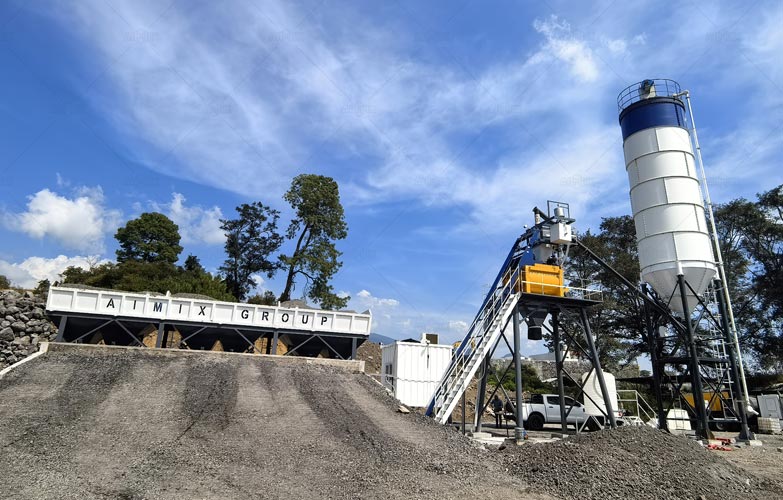
What is a Diesel/Electric Dual-Drive Concrete Plant?
A dual-drive concrete batching plant is engineered with a hybrid power system. Unlike a standard plant that relies on an external transformer, these units feature a high-torque diesel engine coupled with a heavy-duty electric motor. This redundancy ensures that the mixing process—the most critical phase of production—never stops unexpectedly.
The Mechanics of Hybrid Power
The core of the system is the transition gear. When the plant is connected to a stable 380V or 440V industrial line, the electric motor drives the twin-shaft mixer. However, if the voltage drops or the grid fails, the operator can engage the diesel drive. This is particularly vital for a mini concrete plant, where the scale of the project might not justify the installation of a dedicated multi-million dollar substation.
Case Study: High-Altitude Road Construction in the Andes
Consider a recent project involving a bridge expansion in the Ancash Region. The contractor required a steady flow of high-grade concrete but was located four hours away from the nearest reliable power node. Initially, they considered a standard electric model, but the concrete plant price(planta de concreto precio) for such a setup, including the necessary massive industrial generators to handle the start-up load, was prohibitively high.
Operational Efficiency
By opting for a dual-drive mini concrete plant, the team was able to start the mixer using the diesel engine’s mechanical torque, which is far more efficient for overcoming the “dead weight” of a full load than an electric motor struggling with low voltage. Once the plant reached operational speed, they could switch to a smaller, more affordable generator for the auxiliary systems, such as the weighing belts and control room.
Cost-Benefit Analysis
When analyzing the concrete plant price, one must look beyond the sticker cost. A dual-drive plant might have a higher upfront capital expenditure than a basic electric model. However, the “cost of failure” in Peru’s remote regions is extreme. If a mixer stops while full of concrete due to a power cut, the concrete hardens, potentially destroying the mixer shafts and requiring days of manual labor to chip out. The dual-drive system acts as an insurance policy against these catastrophic failures.
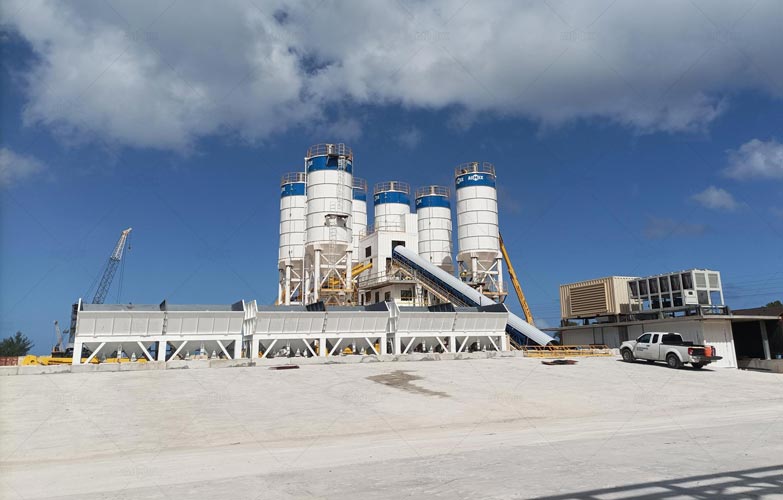
Advantages for the Peruvian and Chilean Markets
The similarities between the geography of Peru and the southern regions of its neighbor mean that concrete plants in Chile(plantas hormigoneras en Chile) are also adopting this technology. Key benefits include:
- Mobility: Most dual-drive plants are designed as mini concrete plant units with a modular or trailed chassis, making them easy to move as the project advances.
- Fuel Economy: Modern diesel engines used in these plants are optimized for high torque at low RPM, reducing fuel consumption compared to running a massive standalone generator 24/7.
- Environmental Adaptation: These plants are built to handle the thin air of high altitudes (3,000+ meters above sea level), where standard electric motors often overheat due to lack of cooling density.
Strategic Procurement: Finding the Right Concrete Plant Price
For a construction firm looking to invest, the concrete plant price is often the deciding factor. However, in Peru, it is essential to calculate the Total Cost of Ownership (TCO). A cheaper, electric-only plant may seem attractive, but the added costs of specialized power stabilization equipment and the risk of downtime usually make it more expensive over a 24-month cycle.
For smaller projects, a mini concrete plant(la mini planta de concreto) with a capacity of 25 to 35 cubic meters per hour is usually sufficient. These units are compact enough to be transported on standard flatbed trucks but powerful enough to handle the rigorous demands of Peruvian infrastructure standards. When searching for a concrete plant Peru-based distributors often recommend models that prioritize mechanical simplicity so that local mechanics can perform maintenance without needing specialized electronic diagnostic tools from overseas.
The Future of Concrete Production in South America
As Peru continues to invest in its “Plan Nacional de Infraestructura sostenible para la Competitividad,” the need for flexible, rugged equipment will only grow. The dual-drive system represents the pinnacle of this flexibility. It acknowledges the reality of the field: that technology must be as resilient as the people using it. Whether it is a large-scale dam project or a mini concrete plant for a local school, the ability to switch power sources ensures that the wheels of progress—and the shafts of the mixer—keep turning.
In conclusion, the diesel/electric dual-drive concrete batching plant is not just a piece of machinery; it is a strategic solution for the energy realities of South America. By providing a bridge between the grid and the generator, it allows contractors to bid on projects in the most remote corners of the country with confidence. For those monitoring the market for a concrete plant Peru or evaluating concrete plants in Chile, the dual-drive hybrid is the gold standard for reliability and long-term profitability.