Choosing a China rubber tyred gantry crane manufacturer can be a practical option for container terminals, precast yards, steel storage areas, shipyards, and other heavy-duty material-handling projects. The main reasons are not simply lower purchase prices. A qualified Chinese manufacturer can combine custom engineering, multiple power and steering configurations, large production capacity, project-specific design, and export experience in one supply chain.
For buyers, the key question is whether the manufacturer can supply the right RTG configuration for the required lifting capacity, span, lifting height, travel mode, operating environment, power system, and duty class. China has a broad manufacturing base for rubber tyred gantry cranes, but suppliers differ significantly in engineering capability and project experience. Therefore, the selection process should focus on technical fit, manufacturing quality, documentation, testing, and after-sales support – not price alone.
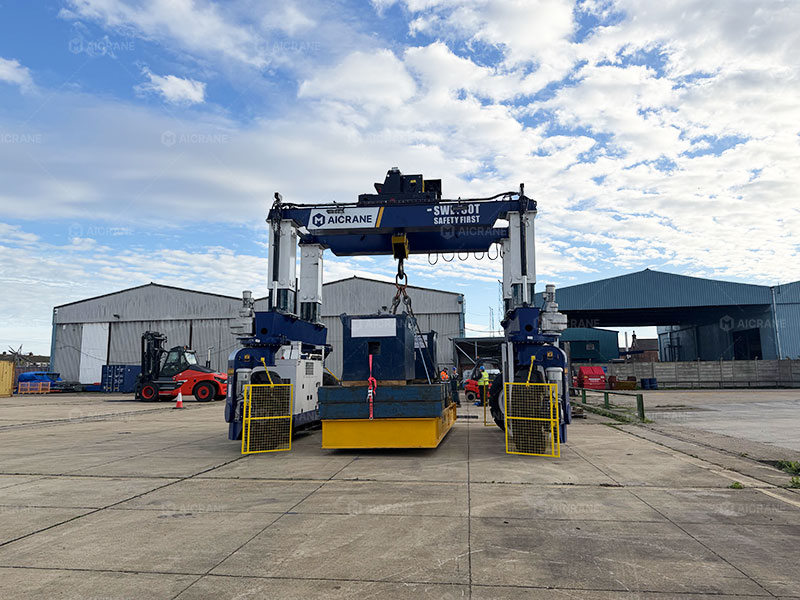
What Is a Rubber Tyred Gantry Crane?
A rubber tyred gantry crane (RTG crane) is a mobile gantry crane supported by rubber tires rather than fixed rails. It can travel within a defined yard and lift loads using a gantry structure, trolley, hoisting mechanism, and control system.
Unlike a rail mounted gantry crane, an RTG does not require a permanent rail runway for its main travel movement. This makes it useful where the lifting area changes, where yard flexibility is important, or where containers and heavy loads need to be handled across multiple storage lanes.
Typical RTG applications include:
- Container terminals and intermodal yards
- Precast concrete storage yards
- Steel stockyards
- Shipbuilding and ship repair facilities
- Heavy machinery manufacturing
- Industrial material storage
- Large component assembly areas
RTGs are not limited to container handling. Their structure and lifting equipment can be configured for different industrial loads, including steel products, precast components, machinery, and other heavy materials.
Why Buy an RTG Crane from a Chinese Manufacturer?
The strongest reason to consider a Chinese manufacturer is the combination of manufacturing scale and customization capability.
RTG cranes are project-specific machines. A buyer may need a 20 ton gantry crane for a relatively compact yard, while another project may require a 100-ton or higher-capacity machine with multiple lifting points, specialized steering, or a particular power supply arrangement.
Chinese manufacturers commonly offer engineering configurations covering different:
- Lifting capacities
- Spans
- Lifting heights
- Wheel arrangements
- Steering modes
- Power systems
- Hoisting speeds
- Traveling speeds
- Duty classifications
- Control systems
- Environmental conditions
This allows the crane to be designed around the actual operating conditions rather than forcing the project into a standard machine configuration.
Customization is particularly important for non-standard RTGs
For example, a precast yard may require a crane with a relatively high lifting height and a specific span to cover casting beds. A container yard may instead prioritize container spacing, stacking height, spreader configuration, and rapid travel between lanes.
These two cranes may both be called RTGs, but their engineering requirements can be very different.
What RTG Configurations Can Chinese Manufacturers Provide?
The exact product range varies by manufacturer, but Chinese rubber tyred gantry crane manufacturers can generally engineer different structural and operating configurations.
Single-girder and double-girder designs
The girder configuration affects the crane’s structural arrangement, lifting capacity, headroom, and overall design.
For heavier industrial applications, double-girder rubber tyred gantry cranes are commonly more suitable because the structure can accommodate higher loads and more demanding operating conditions.
For lighter applications, a simpler configuration may be sufficient if the required capacity and span allow it.
The correct choice should be based on:
- Rated lifting capacity
- Span
- Lifting height
- Duty class
- Wheel loads
- Required operating frequency
- Structural requirements
The manufacturer should verify the complete design rather than selecting the girder type based only on rated tonnage.
Different steering systems
RTGs can be engineered with different steering arrangements depending on the required yard movement.
Possible configurations may include:
- Straight travel
- Diagonal travel
- 90-degree steering
- Swing steering
- 360-degree steering
- Ackermann-type steering arrangements
Not every project needs every steering function. A crane that operates along fixed container lanes may have very different requirements from an industrial RTG that needs to reposition between production areas.
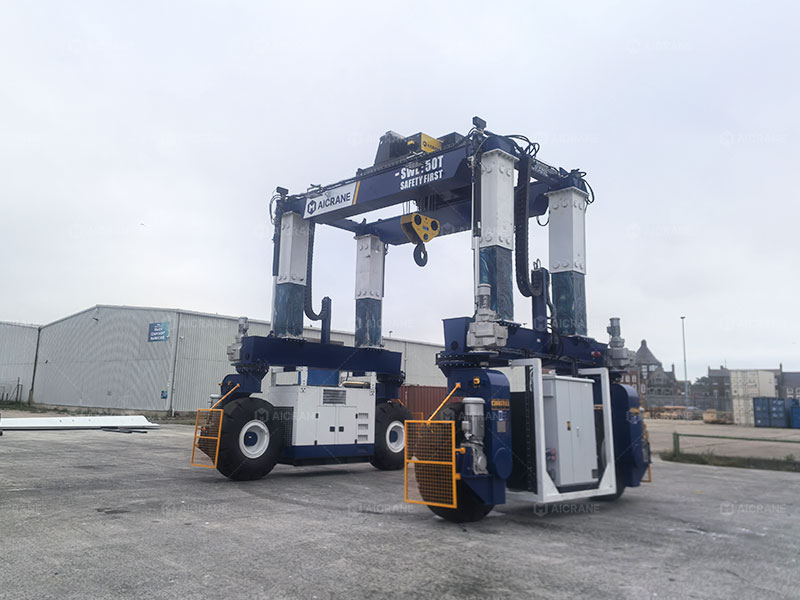
Can a China RTG Manufacturer Customize the Crane for the Yard Layout?
Yes. Yard layout is one of the most important factors in RTG design.
The crane needs to operate within the physical limitations of the site, including:
- Lane width
- Working span
- Ground conditions
- Obstructions
- Storage arrangement
- Required lifting height
- Clearance requirements
- Turning and repositioning requirements
- Power supply arrangement
For example, a crane designed for a container terminal may need to cover several container rows while maintaining sufficient clearance for trucks. An industrial yard may instead require a wider span to cover a production area or storage zone.
This is why buyers should provide a general arrangement drawing, site dimensions, load information, and operating requirements before requesting a final technical quotation.
A professional manufacturer should be able to review these inputs and determine whether the proposed RTG configuration is practical.
What Are the Main Power Options for an RTG?
Power supply is another major difference between RTG projects.
Depending on the application, an RTG may use systems such as:
- Diesel-generator power
- Cable reel power
- Battery-based power
- Other project-specific electrical arrangements
The correct system depends on the operating environment, required mobility, infrastructure, operating hours, and energy strategy.
Diesel-generator systems
Generator-powered RTGs can provide high mobility because the crane carries its own power-generation system.
They can be useful where fixed electrical infrastructure is limited or where the mobile gantry crane needs to move freely around a large yard.
However, fuel consumption, emissions, generator maintenance, and operating costs need to be considered.
Cable reel systems
A cable reel can provide electrical power while allowing controlled crane movement within the cable’s operating range.
This can be attractive where electrical infrastructure is available and the operating route is predictable.
However, the cable route and yard layout need to be considered carefully.
Battery-powered systems
Battery-powered RTGs can reduce dependence on diesel generators and may be suitable for projects where emissions and noise are important considerations.
However, battery capacity, charging infrastructure, operating cycles, ambient temperature, and battery maintenance all affect the practical suitability of this option.
Therefore, buyers should evaluate the total operating system, not simply compare the initial equipment price.
How Does the Cost of a Chinese RTG Manufacturer Compare?
Price is one reason buyers investigate Chinese RTG manufacturers, but the lowest quotation should not automatically be considered the best option.
The total purchase cost can be affected by:
- Crane capacity
- Span
- Lifting height
- Number of wheels
- Hoisting mechanism
- Power system
- Steering system
- Control system
- Electrical components
- Safety devices
- Painting and corrosion protection
- Testing requirements
- Spare parts
- Installation requirements
- Transportation
- Site commissioning
A 50-ton RTG with a basic configuration and a 50-ton RTG designed for high-frequency industrial operation may have substantially different costs.
Therefore, buyers should compare technical specifications line by line instead of comparing only the final quotation amount.
What Should Buyers Check Before Choosing a China RTG Manufacturer?
A supplier evaluation should cover both the manufacturer and the proposed crane.
1. Manufacturing capability
Check whether the supplier actually has the facilities and engineering resources required to manufacture large RTGs.
Important areas include:
- Steel fabrication
- Welding
- Machining
- Electrical assembly
- Crane assembly
- Load testing
- Quality inspection
- Surface treatment
- Final commissioning
A large RTG is not simply a steel structure with a hoist. Its structural, mechanical, electrical, hydraulic, and control systems must work together.
2. Engineering experience
Ask for technical information about similar RTG projects.
Relevant experience should ideally match the buyer’s application, such as:
- Container handling
- Precast concrete
- Steel handling
- Shipyard operations
- Heavy industrial yards
A supplier experienced in container RTGs may still require additional engineering work for a specialized heavy industrial RTG.
3. Compliance and testing
The required standards depend on the destination country and project specifications.
Buyers should clarify applicable requirements for:
- Crane design
- Electrical systems
- Structural calculations
- Welding quality
- Safety devices
- Load testing
- Factory acceptance testing
- Documentation
If the project requires specific standards or third-party inspection, this should be confirmed before production.
4. After-sales support
RTGs operate in demanding environments, and downtime can directly affect yard productivity.
The supplier should be able to provide:
- Operating manuals
- Maintenance documentation
- Electrical drawings
- Spare-parts lists
- Troubleshooting information
- Commissioning support
- Operator training where required
- Technical support after installation
For an overseas project, buyers should also clarify how technical support will be provided across time zones and how replacement parts will be supplied.
What Information Should You Send to an RTG Manufacturer?
A detailed inquiry helps the manufacturer produce a more accurate technical proposal.
At minimum, provide:
Rated load:
For example, 20 t, 50 t, 100 t, or another required capacity.
Span:
The required distance between the crane’s supporting legs.
Lifting height:
Specify the required hook height or working height.
Load type:
Container, steel product, precast component, machinery, shipbuilding component, or another load.
Operating environment:
Indoor/outdoor, coastal, dusty, corrosive, high-temperature, low-temperature, etc.
Working cycle:
Approximate lifting frequency, working hours per day, and operating days per year.
Travel requirements:
Straight travel only or additional steering/repositioning requirements.
Power preference:
Generator, cable reel, battery, or other available system.
Ground conditions:
The supplier needs this information to evaluate wheel loads and operating requirements.
Applicable standards:
Specify project, national, customer, or third-party requirements where applicable.
The more complete the technical information, the less likely the final quotation will change because of missing requirements.
What Are the Limitations of Buying from China?
Buying from China also creates practical challenges that need to be managed.
The most important issue is usually distance.
For overseas projects, buyers need to consider:
- International transportation
- Port handling
- Customs clearance
- Installation
- Commissioning
- Spare-parts logistics
- Local technical support
- Communication during production
A large RTG can also create transportation challenges because its dimensions and weight may exceed standard shipping limits.
For this reason, the contract should clearly define the scope of supply and responsibilities for transportation, installation, testing, and commissioning.
How Should You Compare Two China RTG Manufacturers?
A useful comparison should go beyond the quotation.
| Evaluation factor | What to check |
|---|---|
| Technical fit | Capacity, span, lifting height, duty class |
| Structure | Girder design, legs, wheel arrangement |
| Mobility | Steering and travel configuration |
| Power | Generator, cable reel, battery or other system |
| Controls | Drive system, PLC, remote/control functions |
| Safety | Limit switches, overload protection, emergency systems |
| Quality | Welding, inspection, testing and documentation |
| Project experience | Similar RTG applications |
| Delivery | Manufacturing and shipping schedule |
| Spare parts | Availability and recommended stock |
| Service | Commissioning, training and technical support |
| Total cost | Equipment + logistics + installation + operation |
This approach makes it easier to identify whether a lower quotation is actually lower in total cost.
Is a China Rubber Tyred Gantry Crane Manufacturer Suitable for Your Project?
A Chinese RTG manufacturer can be a strong option when the project requires custom engineering, heavy lifting capacity, flexible yard operation, and competitive manufacturing costs.
However, the right supplier should be selected based on engineering capability rather than country of origin alone. Buyers should verify the manufacturer’s ability to design and manufacture the required RTG, provide appropriate testing and documentation, support installation and commissioning, and supply spare parts throughout the crane’s service life.
For a project inquiry, the most useful starting point is to define the load capacity, span, lifting height, load type, yard layout, steering requirements, power system, working class, and applicable standards. These parameters allow the manufacturer to determine the appropriate RTG configuration and provide a technically comparable quotation.
Frequently Asked Questions
What is the main advantage of buying an RTG crane from China?
The main advantage is the combination of a broad manufacturing base, engineering customization, and competitive production costs. The actual value depends on the individual manufacturer’s technical and quality capabilities.
Can a Chinese manufacturer build a 50-ton or 100-ton RTG?
Yes, RTG manufacturers can engineer cranes in different capacity ranges. The appropriate structure, wheel arrangement, hoisting system, duty class, and operating configuration depend on the project requirements.
Are Chinese RTG cranes suitable for overseas projects?
They can be, provided the manufacturer can meet the project’s required technical standards, testing procedures, documentation, transportation requirements, and commissioning arrangements.
What is more important: RTG price or manufacturer experience?
Manufacturer experience is generally more important than the initial price difference. An unsuitable design can create higher costs through installation problems, downtime, maintenance, or later modifications.
How long does an RTG crane last?
Service life varies significantly with design, duty class, operating frequency, environment, maintenance, and component quality. A manufacturer should provide maintenance requirements and design information appropriate to the expected operating conditions rather than promising one universal service life.
What should be included in an RTG quotation?
A professional quotation should clearly identify the crane capacity, span, lifting height, structural configuration, power system, steering system, electrical components, controls, safety devices, testing, documentation, spare parts, delivery scope, and installation or commissioning responsibilities.
Final Considerations
Choosing a China rubber tyred gantry crane manufacturer is ultimately a technical and commercial decision. China offers a large manufacturing base and many configuration options, but suppliers should not be evaluated on price alone.
For industrial buyers, the most reliable approach is to compare technical capability, project experience, structural design, power and steering configuration, quality control, testing, documentation, after-sales service, and total project cost. When these factors are evaluated together, buyers can identify whether a manufacturer is capable of delivering an RTG that fits the actual yard, load, operating cycle, and long-term maintenance requirements.