Durban’s logistics parks support a wide range of industrial activities, including warehousing, container handling, distribution, manufacturing, and freight transport. These facilities require substantial concrete work, from large warehouse floor slabs and reinforced loading bays to stormwater channels, culverts, and external access roads. Each application places different demands on concrete strength, workability, placement speed, and surface finish. For contractors, maintaining a reliable concrete supply is essential because interruptions during large pours can affect construction schedules and the quality of finished structures. Concrete production and pumping arrangements should be planned according to the scale and sequence of each construction activity. Warehouse floors may require continuous concrete placement across extensive areas, while loading bays involve reinforced structural sections exposed to repeated heavy vehicle movements. Drainage works, meanwhile, often take place in narrower areas with restricted equipment access. Selecting suitable batching, transportation, and concrete pumping equipment helps contractors coordinate these operations more efficiently. It also reduces the risk of concrete delivery delays, inconsistent batches, and placement difficulties across different sections of a logistics development.
Concrete Requirements for Warehouse Floors
Large Slab Pours Require Consistent Concrete Supply
Warehouse floors are among the most concrete-intensive elements of a logistics facility. Large distribution buildings may require extensive slab areas designed to accommodate forklifts, pallet trucks, storage racks, and heavy material-handling equipment. Concrete must be delivered at a consistent rate to prevent unnecessary interruptions during placement and finishing. Contractors should determine the required concrete volume from the floor area and specified slab thickness. For example, a 10,000 m² warehouse floor with a 150 mm slab requires approximately 1,500 m³ of concrete before allowing for wastage or local design variations. Such quantities demand careful coordination between batching, transportation, and placement teams.
Control Workability and Surface Finish
Warehouse floors need more than adequate compressive strength. Surface flatness, levelness, joint layout, and finishing quality also influence their long-term performance. Variations in water content or delivery intervals can complicate screeding and power floating, particularly across large uninterrupted slab sections. Contractors should use an approved mix design and monitor aggregate moisture, water dosage, mixing consistency, and concrete delivery times. Where floor specifications are demanding, concrete placement should follow a defined pour sequence to maintain uniformity across adjacent sections.
Concrete Placement for Loading Bays and Heavy-Duty Pavements
Account for Repeated Heavy Vehicle Loads
Loading bays experience concentrated loads from trucks, trailers, forklifts, and container-handling equipment. Their concrete structures may include reinforced slabs, dock aprons, equipment foundations, ramps, and retaining sections. The required concrete grade, slab thickness, reinforcement arrangement, and joint details should be determined by the structural design and expected loading conditions. Unlike ordinary pedestrian areas, loading zones must withstand repeated traffic and localized stresses. Concrete placement needs to be coordinated carefully around reinforcement, embedded components, and dock-level equipment.
Maintain Continuous Placement Around Reinforcement
Reinforced loading bay sections can be difficult to pour when access is restricted by steel bars, formwork, or existing structures. Concrete must flow into the required sections without excessive segregation or incomplete compaction. A suitable pumping arrangement can deliver concrete directly to the placement area, reducing the need for repeated wheelbarrow or manual handling. This is particularly useful for elevated dock structures, ramps, and sections located away from the concrete discharge point.
Concrete Supply for Drainage Channels and Underground Infrastructure
Manage Narrow Work Areas and Changing Pour Locations
Logistics parks require extensive drainage infrastructure to manage surface runoff from warehouse roofs, paved yards, parking areas, and access roads. Typical concrete works include open drainage channels, culvert headwalls, catch pits, manholes, and stormwater structures. These elements often involve smaller concrete volumes than warehouse slabs, but their placement conditions can be more complicated. Excavations, narrow channels, existing utilities, and restricted vehicle access may prevent concrete trucks from discharging directly into the formwork. A flexible pumping setup helps move concrete through pipelines to locations that are difficult to reach with conventional delivery vehicles.
Consider Durban’s Rainfall and Drainage Requirements
Durban’s coastal climate makes stormwater management an important consideration in logistics park construction. Contractors should plan drainage works with attention to rainfall patterns, site gradients, discharge routes, and the capacity of the drainage network. Concrete placement should be scheduled with weather conditions in mind. Excavations and formwork need suitable protection against water accumulation, while the surrounding ground should be prepared to prevent runoff from contaminating fresh concrete or destabilizing working areas.
Choosing Concrete Pumping Equipment for Different Work Areas
Trailer-Mounted Concrete Pumps for Flexible Site Delivery
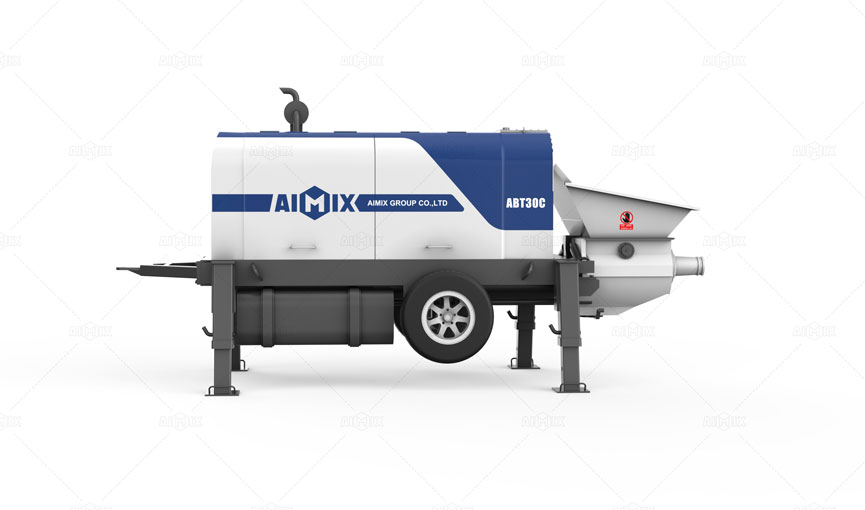
A trailer mounted concrete pump south africa contractors use can be suitable for warehouse foundations, loading bay structures, drainage channels, and other ground-level or elevated concrete placements. The pump remains in a fixed position during operation, while delivery pipelines can be extended to the required pouring location. This arrangement is useful when a project involves several work zones or when concrete must be transported over a longer horizontal distance. Contractors should check the required output, aggregate size, pumping distance, vertical height, and pipeline layout before selecting a model.
Static Concrete Pumps for Repeated High-Volume Operations
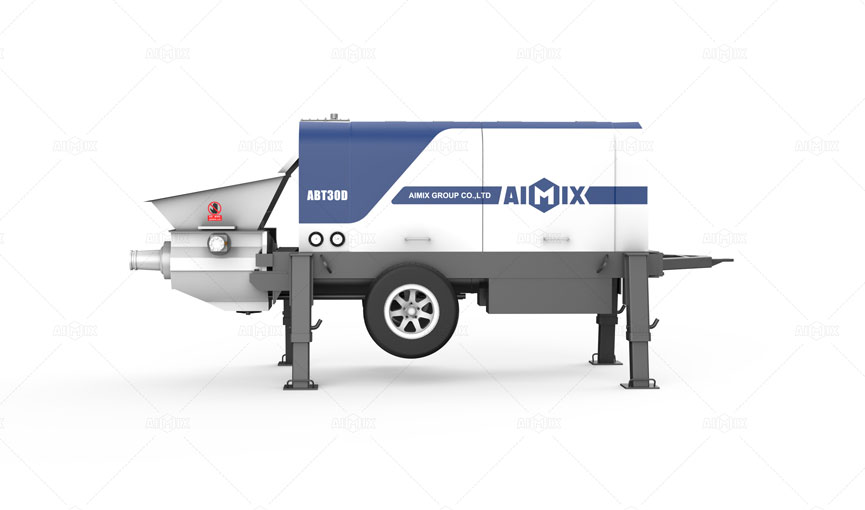
For large logistics developments with extensive structural work, a static concrete pump south africa contractors select may provide a practical solution for repeated pumping operations. Stationary equipment can be positioned near the batching or truck-discharge area, with pipelines routed toward active construction sections. The appropriate configuration depends on the project’s concrete volume, delivery distance, power supply, and operating schedule. Pipeline support, cleaning access, and safe working clearances should be incorporated into the site layout.
Small Concrete Pumps for Restricted Areas
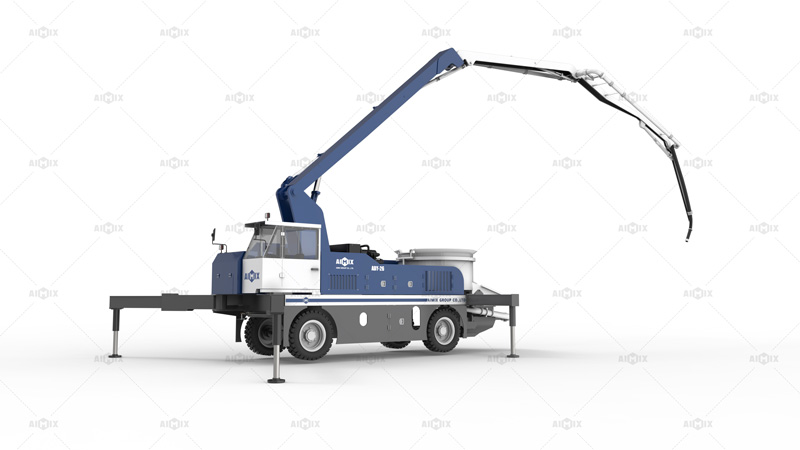
Not every concrete placement requires a high-capacity pump. Smaller drainage structures, equipment foundations, retaining walls, and repair sections may be better served by compact pumping equipment. Contractors comparing a small concrete pump for sale south africa should consider whether the machine can handle the specified concrete mix, aggregate size, and required pumping distance. A smaller unit may be easier to position around confined work areas, but its output must still match the placement team’s requirements.
Coordinating Concrete Production, Transportation, and Pumping
Match Batching Output with Placement Capacity
A concrete supply plan should connect production capacity with truck availability and pump output. If the batching plant produces concrete faster than it can be transported or placed, trucks may queue and concrete may exceed its intended delivery window. If production is too slow, pumping crews and finishing teams may experience interruptions. Contractors should calculate the required concrete volume for each pour, estimate the placement duration, and establish delivery intervals. The plan should also account for travel time between the batching facility and the construction site.
Plan Equipment Allocation Across Multiple Work Zones
Large logistics parks frequently have several activities progressing simultaneously. One team may be pouring a warehouse floor while another constructs drainage channels or loading bay structures. Equipment allocation should reflect the priority and duration of each operation. Where pumping equipment is shared, contractors should establish a clear sequence to avoid conflicts between work crews. For major pours, dedicated pumping equipment may provide more predictable scheduling.
Planning Concrete Supply Around Durban Site Conditions
Consider Traffic, Access, and Material Storage
Durban’s port-related freight activity and busy industrial corridors can influence concrete delivery schedules. Contractors should assess truck access routes, vehicle turning space, site entry restrictions, and the distance between the batching area and active pouring locations. Aggregate stockpiles should be positioned to support efficient loader movement without obstructing construction traffic. Cement storage requires suitable protection from moisture, while water supply and drainage arrangements should support continuous batching operations.
Allow for Weather-Related Construction Interruptions
Heavy rainfall can affect excavation stability, aggregate moisture, site access, and concrete finishing operations. Contractors should monitor weather forecasts and adjust production schedules when necessary. Temporary drainage, covered material storage, suitable ground preparation, and protection for freshly placed concrete can help reduce weather-related disruption.
Estimating Equipment and Concrete Supply Requirements
Evaluate the Complete Cost of Concrete Placement
The cost of supplying concrete includes more than the price per cubic metre. Contractors should consider batching charges, aggregate and cement procurement, transportation, pumping equipment, pipeline installation, labor, fuel or electricity, and maintenance. For projects using several concrete placement methods, the equipment budget should be assessed against the total construction schedule rather than a single pour. A pump that is suitable for repeated warehouse and loading bay operations may offer a different operational value from one selected only for occasional drainage work.
Select Equipment According to Actual Project Conditions
Before purchasing or hiring equipment, contractors should confirm the maximum pumping distance, vertical height, required output, concrete mix characteristics, and available site access. These factors determine whether a trailer-mounted, static, or is appropriate. For Durban logistics park developments, a coordinated concrete supply system is essential to keeping warehouse floors, loading bays, and drainage infrastructure on schedule. Matching production capacity, delivery arrangements, and pumping equipment to each construction activity helps maintain consistent placement quality and more predictable project execution.