Boat travel lifts, also known as mobile boat hoists, are essential equipment in marinas, shipyards, and boat maintenance facilities. They are designed to safely lift, transport, and launch vessels of various sizes, ranging from small recreational boats to large commercial yachts. One of the most critical features ensuring efficient and safe operation is hydraulic steering technology. This advanced system allows operators to maneuver boats with precision, even when handling heavy and oversized vessels in confined spaces.
In this article, we explore the working principles, key components, advantages, and applications of hydraulic steering technology in boat travel lifts, highlighting why it is indispensable for precise vessel movement.
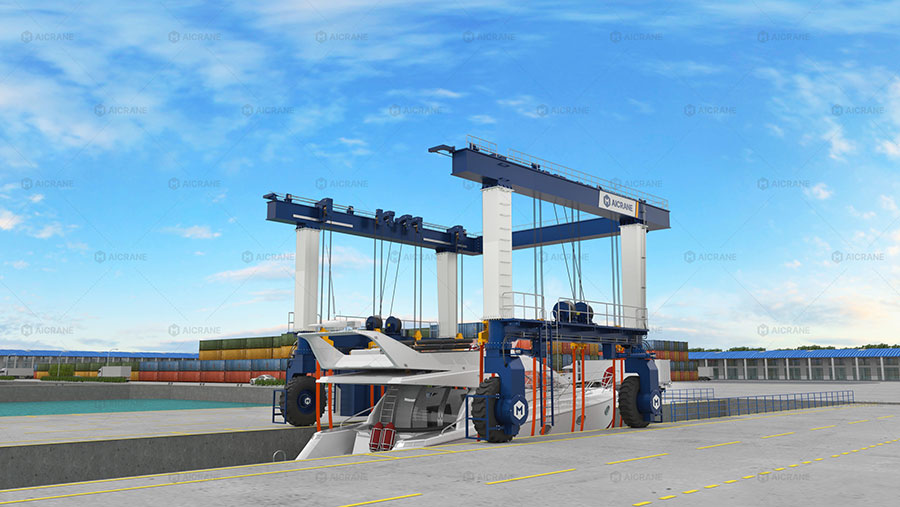
What Is Hydraulic Steering Technology in Boat Travel Lifts
Hydraulic steering technology uses pressurized fluid to control the direction of a travel lift’s wheels, replacing traditional mechanical steering systems that rely on manual force or physical linkages. This technology allows operators to move the lift smoothly and precisely, which is essential for safely transporting boats in marinas and shipyards where space is limited.
Basic Working Principle of Hydraulic Steering
When an operator commands the travel lift to turn, a hydraulic pump generates pressurized fluid that flows to hydraulic cylinders connected to the steering arms of the wheels. These cylinders then adjust the angle of the wheels, allowing the lift to change direction smoothly. The system can simultaneously control multiple wheels, ensuring that heavy vessels remain stable during transportation.
Hydraulic steering enables fine adjustments that are difficult to achieve with mechanical steering. For instance, when maneuvering a large yacht within a narrow dock, the operator can make subtle corrections to the lift’s trajectory, minimizing the risk of collision or hull damage.
Why Precise Steering Is Critical for Boat Handling
Precision in boat movement is crucial for several reasons:
- Limited Space: Marinas and shipyards often have narrow lanes and tight docking areas. Accurate steering ensures the marine hoist can navigate these spaces safely.
- High-Value Vessels: Boats and yachts represent significant investments. Even minor collisions can result in costly damages.
- Operator Safety: Precise movement reduces the risk of accidents, protecting both the crew and the equipment.
Key Components of a Hydraulic Steering System
A hydraulic steering system in a boat travel lift consists of several essential components:
Hydraulic Pump
The pump generates the pressure required to operate the hydraulic cylinders. High-quality pumps ensure consistent performance, even under heavy loads or continuous operation.
Hydraulic Cylinders
Cylinders convert hydraulic pressure into mechanical movement. They adjust the steering angle of each wheel to allow precise directional changes.
Steering Linkages
These components connect the cylinders to the wheels, transmitting the force needed for smooth steering.
Control Valves and Operator Controls
Control valves regulate hydraulic fluid flow, while operator controls – such as joysticks or steering wheels – allow the operator to direct the lift with precision.
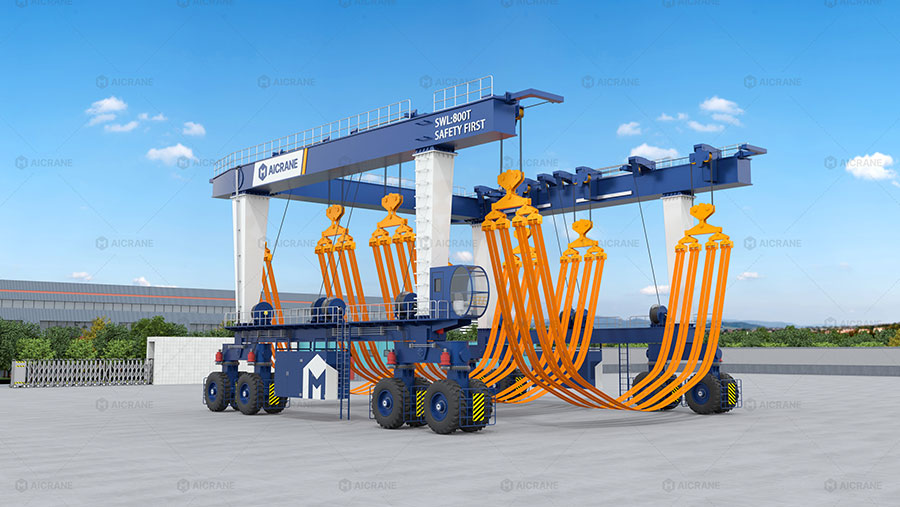
Advantages of Hydraulic Steering for Boat Travel Lifts
Hydraulic steering provides multiple benefits that make it essential for modern boat travel lifts or shipyard cranes:
Smooth and Precise Steering Control
Hydraulic systems provide fluid and accurate wheel movement, which is critical when lifting and transporting boats. Operators can perform subtle adjustments, ensuring vessels remain aligned and stable.
Easy Maneuvering in Narrow Marina Spaces
Hydraulic steering allows the lift to navigate confined areas, docks, and boatyard lanes efficiently. Features like crab steering or 90-degree transverse movement further enhance maneuverability.
Reduced Operator Effort
Hydraulic assistance reduces the physical effort required from the operator. Even when handling large boats or heavy loads, steering remains smooth and manageable.
Improved Safety During Boat Handling
By providing precise control over movement, hydraulic steering minimizes risks of collision, tipping, or unbalanced lifting. Combined with synchronized hoisting systems, it enhances overall operational safety.
Enhanced Stability While Carrying Heavy Boats
Hydraulic steering systems can control all four wheels simultaneously, distributing weight evenly and maintaining balance. This ensures safe movement even when transporting boats weighing tens of tons.
Applications of Hydraulic Steering in Marine Operations
Hydraulic steering technology is widely used in modern boat travel lifts for various applications:
- Marinas and Yacht Clubs: Safely moving yachts from storage areas to launch ramps.
- Shipyards and Repair Facilities: Maneuvering vessels through tight workshop spaces for maintenance or painting.
- Commercial Docks: Handling large fishing boats or passenger vessels efficiently.
- Boat Manufacturing Facilities: Transporting newly built boats from assembly lines to water launch areas.
By enabling precise movement, hydraulic steering enhances productivity and reduces the time and risk associated with boat handling.
Conclusion
Hydraulic steering technology is a critical feature of modern boat travel lifts, enabling precise, safe, and efficient movement of vessels in marinas, shipyards, and boat maintenance facilities. Its combination of smooth control, easy maneuverability, reduced operator effort, and enhanced safety ensures that boats of all sizes can be transported and launched with confidence. For operators handling high-value vessels or working in confined spaces, hydraulic steering is indispensable for protecting both equipment and cargo.
As boatyards continue to prioritize efficiency and safety, integrating advanced hydraulic steering systems in Aicrane boat travel lifts has become a standard requirement. Whether handling small yachts or large commercial vessels, operators can rely on hydraulic steering to provide the precision necessary for professional marine operations.