Gantry cranes are essential lifting devices in industries that require the handling of heavy materials and equipment. These cranes provide the flexibility, strength, and efficiency needed in warehouses, construction sites, shipyards, steel factories, and ports. While gantry cranes share the fundamental purpose of moving heavy loads, they differ significantly in design, mobility, applications, and operational costs. Understanding the differences between mobile gantry cranes and fixed gantry cranes is crucial for selecting the right equipment for specific industrial needs.
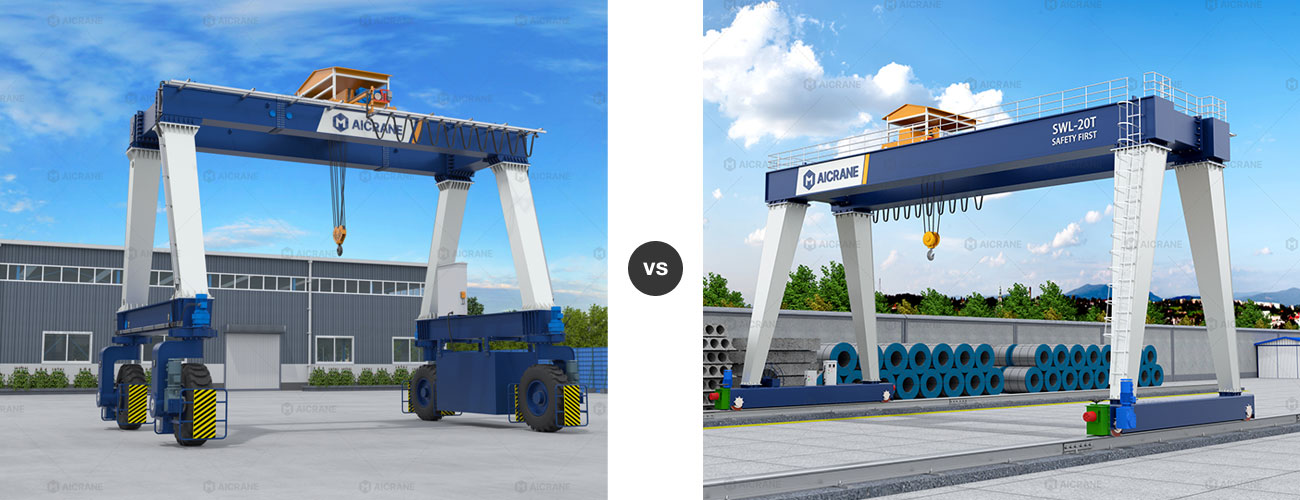
1. Structural Design
The most obvious difference between mobile and fixed gantry cranes lies in their structural design.
Mobile Gantry Cranes:
Mobile gantry cranes are designed with mobility in mind. They are typically equipped with wheels or rubber tires that allow the entire crane to move along a flat surface. Some models have adjustable heights and spans, allowing operators to adapt the crane to different work environments. The structural design is often lighter compared to fixed cranes to facilitate movement without compromising stability. Many movable gantry cranes are also modular, meaning they can be disassembled, transported, and reassembled at different locations.
Fixed Gantry Cranes:
Fixed gantry cranes, sometimes referred to as stationary or permanent gantry cranes, are installed in a specific location and are not designed to move. Their structure is anchored to the ground, often with reinforced concrete foundations or bolted rails. This fixed positioning allows them to support heavier loads and operate with higher precision since stability is maximized. The overall structure tends to be more robust and durable, built for continuous operation in a single location.
2. Mobility and Flexibility
Mobility is one of the primary factors that differentiate the two types of gantry cranes.
Mobile Gantry Cranes:
The defining feature of mobile gantry cranes is their ability to travel across a site. They can be moved along rails, concrete surfaces, or uneven terrain, depending on the type of wheels and design. This mobility allows them to serve multiple areas within a facility or construction site without the need for multiple cranes. Mobile gantry cranes are particularly beneficial for projects that require temporary or intermittent lifting operations, such as shipbuilding, outdoor construction, and maintenance work.
Fixed Gantry Cranes:
Fixed gantry cranes do not move. Their operational range is limited to the area within their span. While they can lift extremely heavy loads within their designated zone, they cannot be relocated without significant construction work. Fixed gantry cranes are ideal for production lines or storage facilities where material handling occurs in the same location continuously, such as steel mills, precast concrete plants, or container yards in ports.
3. Load Capacity
Load capacity is another critical consideration when choosing between mobile and fixed gantry cranes.
Mobile Gantry Cranes:
Mobile gantry cranes generally have lower load capacities compared to fixed gantry cranes, although advances in engineering have produced high-capacity mobile cranes capable of handling hundreds of tons. The mobility requirement imposes constraints on structural weight and stability, which limits their maximum lifting capacity. Standard mobile gantry cranes are commonly used for lifting loads ranging from 5 tons to 100 tons, but specialized heavy-duty versions exist for larger capacities.
Fixed Gantry Cranes:
Fixed gantry cranes can handle much heavier loads due to their stable foundation and robust construction. They are often used in industries where extremely heavy lifting is required, such as steel processing, shipbuilding, and large-scale construction. Fixed cranes can easily handle loads of 200 tons or more, making them suitable for applications where maximum load capacity is a priority.
4. Installation and Setup
The installation and setup processes for mobile and fixed gantry cranes are markedly different.
Mobile Gantry Cranes:
One of the advantages of mobile gantry cranes is their relatively simple installation. They can often be delivered pre-assembled or in modular sections and require minimal foundation work. Operators can quickly set them up on flat surfaces, making them ideal for temporary projects or sites with changing layouts. Some mobile cranes also feature hydraulic or mechanical systems to adjust height, span, and load position.
Fixed Gantry Cranes:
Fixed gantry cranes require extensive installation work. They must be anchored securely, often requiring reinforced concrete foundations or specialized rails. Installation is a time-consuming process, typically handled by specialized engineers. Once installed, these cranes offer unmatched stability and precision but lack the flexibility to change locations without major construction modifications.
5. Operational Speed and Efficiency
Operational efficiency is influenced by the crane type and the workflow design.
Mobile Gantry Cranes:
Mobile gantry cranes offer flexibility but sometimes compromise on speed and efficiency due to their mobility mechanisms. Moving the crane from one location to another takes time, and the stability of the crane during transit must be carefully managed. However, in dynamic work environments, this mobility can save time and reduce the need for multiple cranes.
Fixed Gantry Cranes:
Fixed gantry cranes excel in operational efficiency within their designated range. They can lift and move heavy loads quickly, thanks to their rigid structure and stable foundation. For production lines or loading/unloading operations that are repetitive and predictable, fixed rail gantry cranes offer higher throughput and lower operational risks compared to mobile cranes.
6. Cost Considerations
Cost differences between mobile and fixed gantry cranes are also significant.
Mobile Gantry Cranes:
Mobile gantry cranes are generally less expensive in terms of initial purchase and installation. Since they require minimal foundation work and can be moved to different sites, they offer cost savings for projects with temporary or flexible lifting needs. However, maintenance costs may be higher due to wear and tear on wheels, tires, or moving components.
Fixed Gantry Cranes:
Fixed gantry cranes have higher initial costs due to construction, installation, and foundation work. Maintenance costs are usually lower, as there are fewer moving structural components that are exposed to wear. Over the long term, for applications requiring consistent heavy lifting, the cost efficiency of fixed cranes can outweigh their higher initial investment.
7. Applications
Both mobile and fixed gantry cranes serve unique roles based on their design and capabilities.
Mobile Gantry Cranes Applications:
Mobile gantry cranes are widely used in industries and situations where flexibility is crucial. Examples include:
- Outdoor construction sites for moving precast concrete or steel components
- Shipyards for lifting boats, ship sections, or marine equipment
- Temporary warehouses or storage areas
- Maintenance and repair operations in factories or ports
- Projects requiring frequent relocation of lifting equipment
Fixed Gantry Cranes Applications:
Fixed gantry cranes are ideal for industries requiring consistent lifting in the same location. Examples include:
- Steel mills for handling steel coils, slabs, and heavy components
- Precast concrete factories for assembly and transportation of beams
- Port container yards for repetitive loading and unloading
- Heavy machinery assembly lines
- Rail-mounted operations for transporting materials along defined paths
8. Safety Considerations
Safety is a vital factor in crane operation, and the differences in design affect safety protocols.
Mobile Gantry Cranes:
Because mobile gantry cranes are moved frequently, operators must be cautious about surface conditions, slope, and stability. Uneven terrain or obstacles can pose risks during transit or lifting operations. Regular inspections of wheels, tires, and mobility mechanisms are essential to ensure safe operation.
Fixed Gantry Cranes:
Fixed gantry cranes offer a higher degree of inherent safety due to their anchored structure. Stability is maximized, and the risk of tipping or displacement is minimal. Safety measures often focus on proper load handling, mechanical inspections, and operator training.
9. Customization and Versatility
Customization plays a role in selecting a crane based on operational requirements.
Mobile Gantry Cranes:
Mobile gantry cranes are highly versatile, with adjustable heights, spans, and modular designs. They can be customized to accommodate different load sizes and site layouts, making them suitable for projects with changing requirements.
Fixed Gantry Cranes:
Fixed gantry cranes are generally customized for long-term operations in a defined area. While adjustments are possible, they are less flexible than mobile cranes. The focus is on heavy-duty performance, precision, and durability.
Conclusion
Both mobile and fixed gantry cranes have distinct advantages and limitations. Mobile gantry cranes prioritize flexibility, ease of installation, and adaptability, making them ideal for temporary projects, maintenance tasks, and dynamic construction environments. Fixed gantry cranes, on the other hand, emphasize stability, heavy load capacity, and operational efficiency, making them perfect for high-volume, long-term industrial applications.
Selecting the right crane depends on factors such as load capacity requirements, site conditions, project duration, budget, and operational needs. By understanding the differences between mobile and fixed gantry cranes, industries can optimize material handling, reduce operational risks, and enhance productivity. Ultimately, both types of gantry cranes play complementary roles in modern industrial operations, ensuring that lifting and transportation tasks are performed safely, efficiently, and reliably.