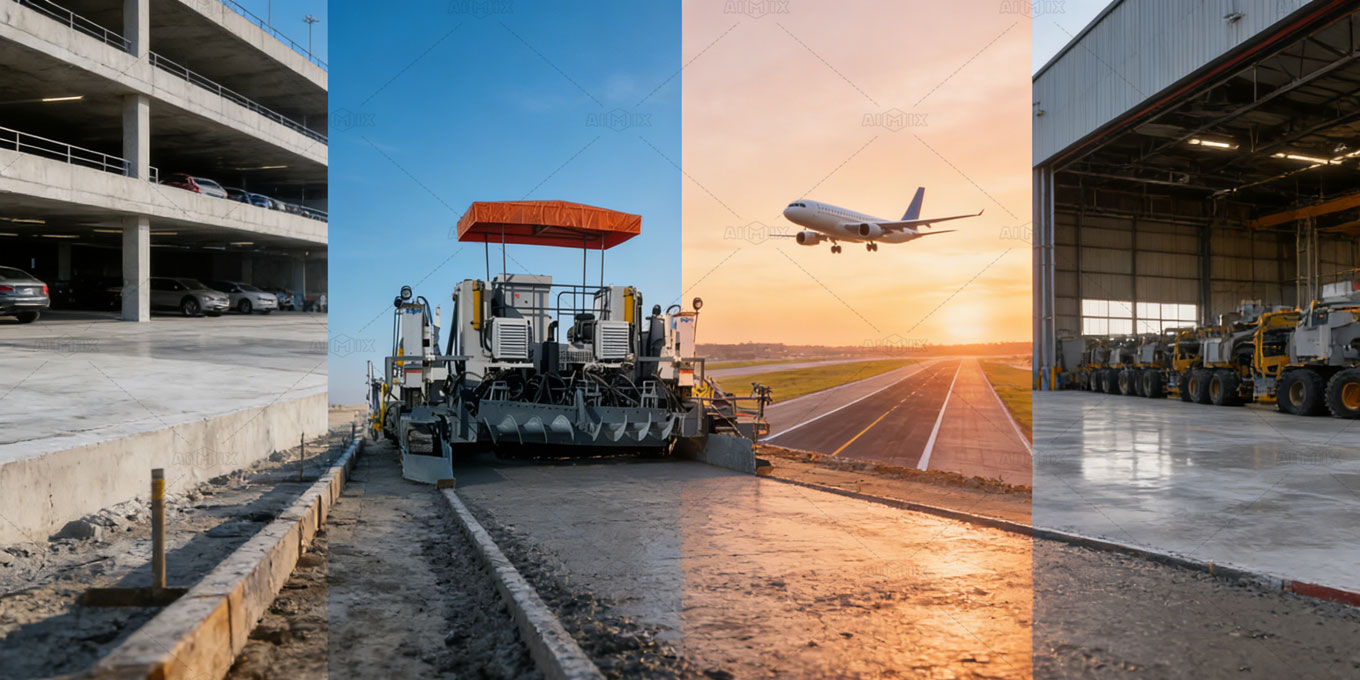
Traffic loading is one of the most important factors determining how concrete pavement should be produced and constructed. Roads serving freight corridors, logistics centers, industrial compounds, ports, airports, and large infrastructure projects in Saudi Arabia may experience repeated loading from heavy trucks, trailers, buses, and specialized construction vehicles. Unlike lightly trafficked residential pavement, these surfaces must withstand sustained axle pressure, braking forces, turning movements, and environmental exposure. Consequently, pavement construction begins long before concrete reaches the roadway. Mix proportions, production capacity, delivery arrangements, placement equipment, and finishing methods must all correspond to the anticipated traffic regime.
Heavy traffic also changes the practical requirements for concrete production. A suitable batching plant in Saudi Arabia must consistently produce concrete with controlled proportions and adequate workability, while a portable concrete plant in Saudi Arabia may provide greater flexibility for remote road or infrastructure projects. Once the concrete reaches the paving zone, a concrete pavement machine can help distribute, level, and finish the material at a controlled rate. The relationship between traffic demand and equipment selection is therefore direct: heavier loads generally require more carefully engineered concrete and a more disciplined construction workflow.
How Traffic Loads Determine Pavement Concrete Requirements
Heavy Axle Loads Create Greater Structural Demand
Traffic does not affect pavement through vehicle weight alone. Axle configuration, wheel loads, traffic frequency, vehicle speed, braking, and turning all influence the stresses imposed on concrete. A road carrying occasional passenger vehicles has a fundamentally different loading pattern from an industrial access road used continuously by fully loaded dump trucks.
Repeated heavy axle loading can contribute to cracking, fatigue, joint deterioration, and surface wear when pavement design or concrete quality is inadequate. The concrete mixture therefore needs sufficient compressive and flexural performance, appropriate aggregate characteristics, and controlled water content. Pavement thickness and reinforcement are determined through structural design, but the production system must be capable of delivering the specified mixture consistently.
Concrete Mix Design Must Reflect Pavement Service Conditions
Concrete pavement requires a balance between strength, durability, workability, and setting behavior. Increasing strength alone does not automatically produce better pavement. Excessive water, poor aggregate grading, inadequate curing, or unsuitable air characteristics can compromise long-term performance even when the nominal strength target appears satisfactory.
For heavy-duty pavement, aggregate selection becomes particularly consequential. Well-graded aggregates can contribute to a dense concrete matrix while reducing excessive paste demand. Cementitious materials and admixtures may then be adjusted according to the required strength development, workability, setting time, and environmental conditions.
Concrete Production Equipment for Saudi Arabian Pavement Projects
Batching Plant in Saudi Arabia for High-Volume Road Construction
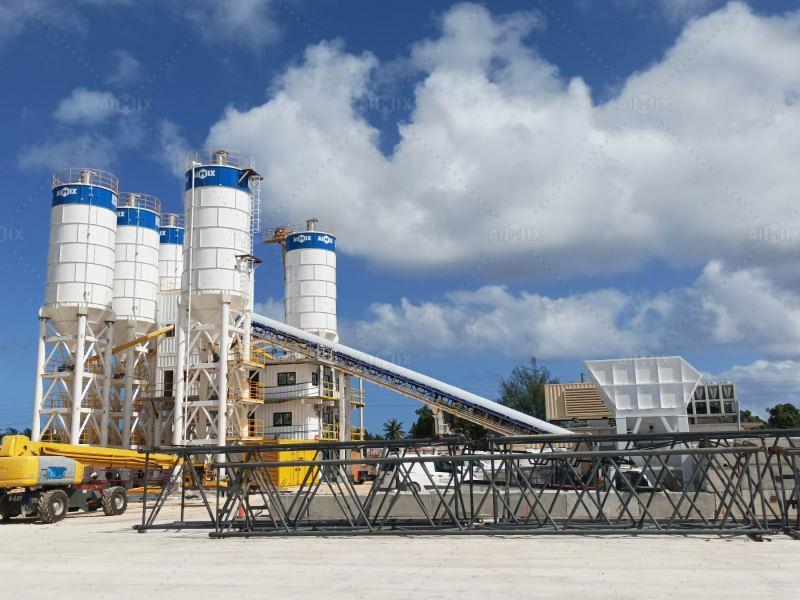
A batching plant for sale in Saudi Arabia is well suited to pavement projects where large quantities of concrete must be produced according to a controlled mix design. The plant typically handles aggregate storage, weighing, cement dosing, water measurement, admixture addition, and mixing within an organized production cycle.
For major highways, industrial roads, airport pavements, and logistics facilities, production consistency is critical. A batching plant can maintain a regular supply of concrete while allowing operators to monitor material proportions and adjust production according to the construction schedule.
High-volume pavement construction also places emphasis on output stability rather than isolated peak capacity. If paving equipment operates continuously, concrete production and delivery must keep pace. Otherwise, interruptions may create undesirable construction joints or disrupt the planned paving sequence.
Portable Concrete Plant in Saudi Arabia for Remote Pavement Projects
A portable concrete plant in Saudi Arabia can be advantageous when pavement construction occurs far from established concrete supply infrastructure. Large infrastructure corridors may extend across sparsely developed areas, making long-distance ready-mix transportation inefficient or operationally uncertain.
Portable production brings the concrete supply point closer to the work zone. Raw materials can be transported to the temporary production location and converted into fresh concrete according to the project’s requirements. This arrangement can reduce delivery distance and provide greater control over production timing.
The concept is particularly relevant to temporary roads, remote industrial facilities, construction access routes, and infrastructure projects where the paving front gradually moves across a large area.
Concrete Paving Machine in Saudi Arabia for Controlled Placement
A concrete paving machine in Saudi Arabia can provide a more systematic approach to placing concrete across wide pavement sections. Instead of relying entirely on manual distribution and finishing, paving equipment can help spread the concrete across the designed width and establish a relatively consistent pavement profile.
This becomes increasingly important as pavement width and traffic requirements increase. Uniform placement supports more consistent thickness, while integrated vibration and finishing functions can help achieve the required consolidation and surface characteristics, depending on the machine configuration.
How Concrete Production and Paving Systems Work Together
Maintaining a Continuous Concrete Supply
Concrete pavement construction is inherently sequential. Once concrete production begins, the supply chain must remain synchronized with transportation and paving. A production plant may have sufficient nominal capacity, but actual paving performance depends on loading cycles, haul distance, traffic conditions, discharge arrangements, and the operating speed of the paving machine.
For this reason, production capacity should be calculated against the required paving rate rather than considered independently. If paving progresses at a steady rate but concrete deliveries arrive irregularly, the equipment on the roadway may spend valuable time waiting for material.
Transporting Concrete Without Losing Workability
Fresh concrete changes continuously after mixing. Time, temperature, water evaporation, and handling conditions can influence workability and setting behavior. In Saudi Arabia, high ambient temperatures can make this issue more pronounced during certain construction periods.
Concrete transportation should therefore be planned around the distance between the batching plant and paving zone. Locating a portable concrete plant for sale closer to the construction front can shorten the logistical chain, while suitable delivery scheduling can reduce unnecessary waiting time before placement.
Placement, Compaction, and Surface Finishing
Once delivered, concrete must be distributed and compacted effectively. Inadequate consolidation can leave voids and weak zones, while inconsistent thickness can create localized areas of higher structural stress under heavy traffic.
A paving machine can help establish consistent geometry across the pavement. Following placement, surface finishing and texturing are used to achieve the specified profile and skid characteristics. Joints must also be constructed at planned locations so that expected movement and shrinkage can be accommodated without uncontrolled cracking.
Adapting Concrete Pavement Construction to Heavy-Traffic Conditions
Industrial Yards and Logistics Routes
Industrial yards experience loading patterns that differ from conventional highways. Trucks may stop, accelerate, reverse, and turn repeatedly in confined areas. These maneuvers can impose substantial localized stresses on pavement, particularly around loading bays, intersections, and turning zones.
Concrete mix production for such areas should therefore be coordinated with the pavement design and the specific operational behavior of vehicles. High-quality aggregate, controlled water content, adequate strength development, and proper joint detailing become important components of the overall pavement system.
Mining and Infrastructure Access Roads
Mining and large infrastructure projects can generate particularly demanding traffic. Heavy haul trucks and construction equipment may use access roads continuously during material extraction or project development.
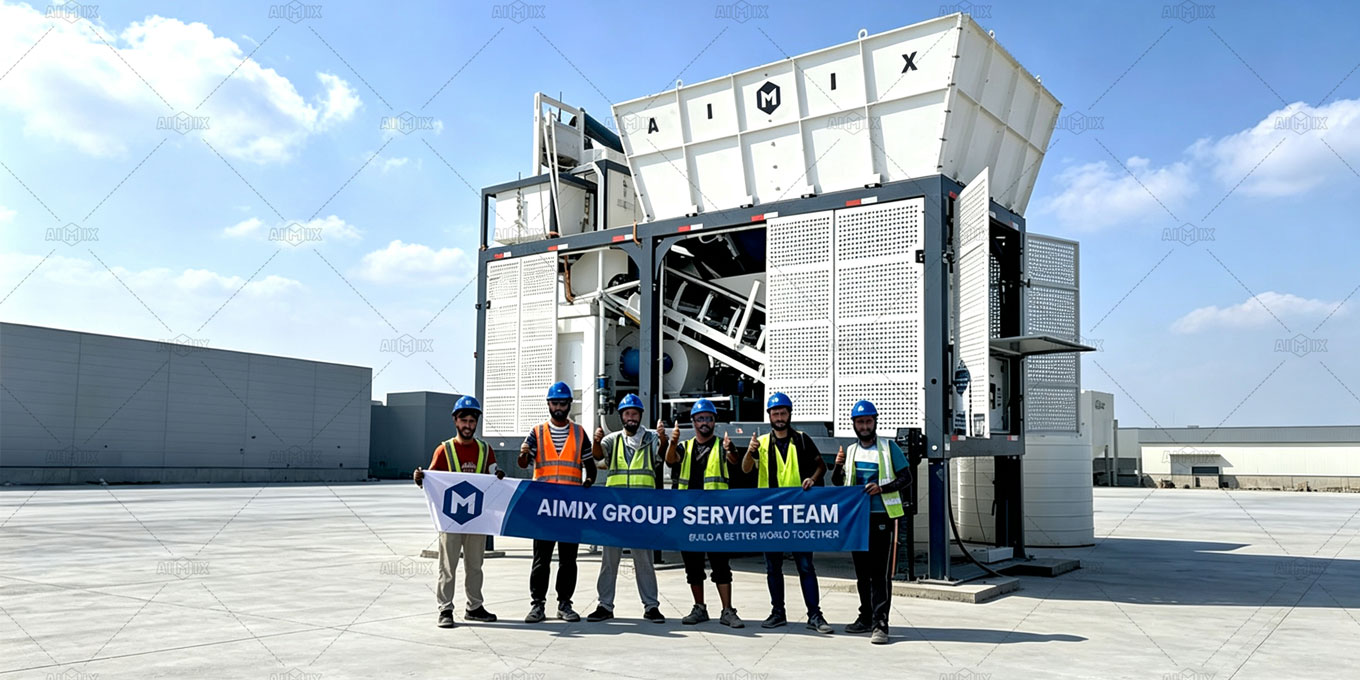
In remote Saudi Arabian locations, a mobile batch plant can support construction where conventional ready-mix delivery would involve excessive travel. The production system can be established near the active work area and relocated if the construction front changes substantially.
Quality Control Supports Long-Term Pavement Performance
Heavy-duty concrete pavement requires disciplined quality control from aggregate storage through final curing. Material proportions should be monitored during batching, while fresh concrete properties and hardened performance should be verified according to the project specification.
Curing is particularly important because premature moisture loss can affect concrete strength development and increase the risk of surface defects. Proper joint construction, curing, finishing, and early-age protection complement the performance achieved through mix design.
Traffic loading ultimately determines how demanding a concrete pavement system must be. Heavy and repetitive vehicle loads require more than a stronger mixture; they require coordination between mix design, concrete production, delivery, paving, finishing, and curing. A batching plant in Saudi Arabia can support high-volume production, while a portable concrete plant in Saudi Arabia can bring production closer to remote construction fronts. At the placement stage, a concrete paving machine in Saudi Arabia can help maintain consistent pavement geometry and production flow. When these elements are matched to actual traffic conditions, concrete pavement construction becomes more controlled, durable, and operationally resilient.