Buying a ready mix concrete plant for sale is a major investment, so equipment selection should begin with market demand rather than plant capacity or price alone. Before purchasing, investors need to understand local construction activity, potential customers, concrete consumption, competition, project locations, and expected sales volume. A realistic demand assessment helps determine the right production capacity, plant type, investment level, and business model while reducing the risk of purchasing equipment that remains underutilized.
Study Local Construction Activity
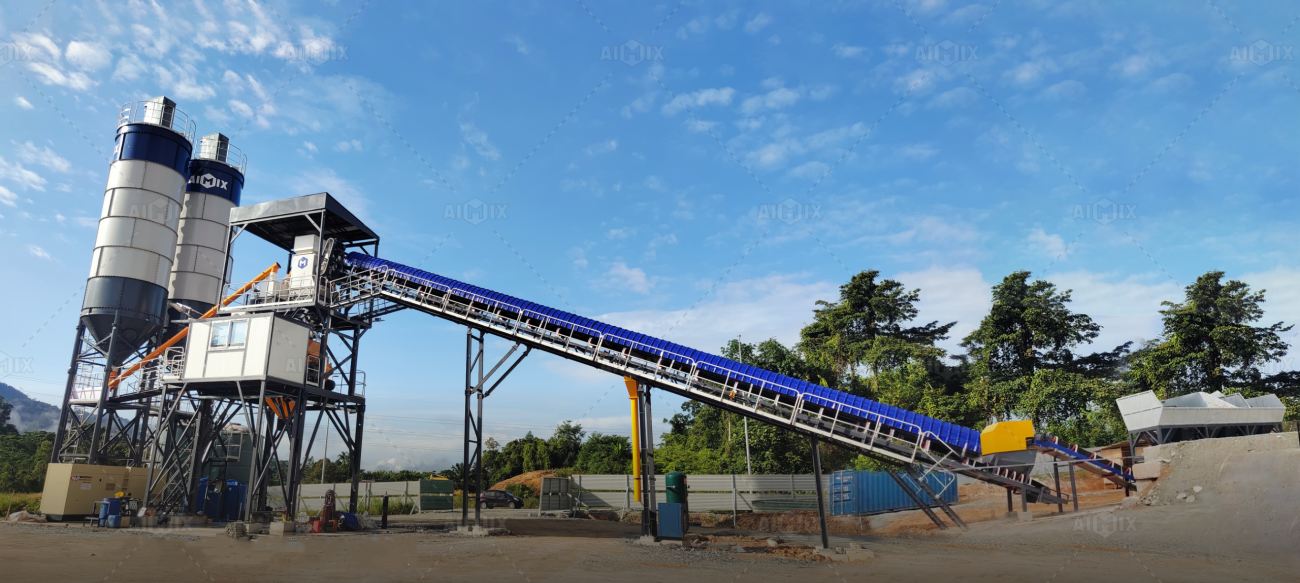
The first step is to examine the construction market in the target area. Look at residential development, commercial buildings, industrial facilities, roads, bridges, ports, airports, and other infrastructure projects. Large and long-term construction projects can create stable demand for ready mix concrete, while rapidly developing urban areas may provide opportunities for supplying multiple smaller projects.
It is also important to consider how construction activity may change over the next several years. A market with only one major project may support strong short-term demand but become less attractive after project completion. In contrast, areas with continuous infrastructure development and private construction can provide a more sustainable customer base for a new ready mix concrete business.
Identify Your Potential Customers
Market demand should be measured by identifying actual customer groups rather than relying only on general construction statistics. Potential customers can include building contractors, infrastructure contractors, property developers, precast concrete producers, government projects, and other construction companies.
Talk to potential customers before investing in a ready mix concrete plant for sale. Find out how much concrete they currently purchase, which concrete grades they require, how frequently they need deliveries, and what problems they experience with existing suppliers. This information can reveal whether there is a genuine market opportunity and help estimate realistic sales volumes.
Estimate Concrete Demand and Required Capacity
Once potential customers have been identified, estimate their expected concrete consumption. For example, if several contractors collectively require 300 to 400 m³ of concrete per day, a plant with a theoretical capacity of 120 m³/h may not need to operate continuously at maximum output. A smaller plant could potentially satisfy the market while requiring less initial investment.
Capacity should therefore be based on realistic demand rather than maximum possible production. Buyers should consider peak demand, average daily production, working hours, delivery distance, and seasonal fluctuations. It is generally better to select a plant that can meet expected demand with some room for growth than to purchase excessive capacity that remains idle.
Analyze Competitors and Existing Concrete Suppliers
Competition can have a major influence on the success of a new ready mix concrete business. Identify existing ready mix suppliers in the target market and compare their plant locations, production capacity, delivery coverage, product range, pricing, reputation, and customer service.
The goal is not necessarily to offer the lowest concrete price. A new supplier may compete through faster delivery, reliable quality, specialized concrete grades, better service, or closer proximity to construction sites. If competitors already have extensive production capacity and established customer relationships, entering the market may require a more specific strategy or an underserved geographic area.
Consider the Importance of Plant Location
Ready mix concrete is highly time-sensitive because transportation and delivery distance can affect concrete quality and logistics costs. For this reason, plant location is closely connected to market demand. A plant positioned near a concentration of construction projects can serve more customers efficiently than a plant located far from its main market.
When evaluating a potential site, consider road access, traffic conditions, aggregate availability, land cost, water supply, electricity, and the distance to major construction areas. A location with strong access to both raw materials and customers can reduce transportation costs and improve delivery efficiency.
Learn from Regional Market Conditions
Market research should also account for regional differences. For example, investors researching a ready mix concrete plant in Bangladesh should consider the country’s urban development, infrastructure projects, commercial construction, and local transportation conditions. Demand may vary considerably between major metropolitan areas and smaller cities, so national-level statistics alone are not enough to determine the right plant capacity.
Similarly, the market for a ready mix plant in Singapore has different characteristics because of its dense urban environment, limited land availability, mature construction industry, and strong infrastructure requirements. In such a market, compact plant layouts, efficient logistics, environmental considerations, and reliable production may be more important than simply maximizing plant capacity.
Calculate Expected Revenue and Operating Costs
Market demand must ultimately be translated into a financial model. Estimate the expected concrete selling price and realistic annual sales volume, then compare potential revenue with raw material, labor, fuel or electricity, transportation, maintenance, land, financing, and administrative costs.
Do not calculate profitability using the plant’s maximum theoretical capacity. Instead, use conservative utilization assumptions for the first few years. A plant capable of producing 100 m³/h does not automatically generate revenue based on 100 m³/h throughout the working day. Actual production depends on customer orders, truck availability, delivery distance, weather, project schedules, and plant downtime.
Plan for Seasonal and Project-Based Demand
Construction demand can fluctuate throughout the year. Weather conditions may reduce construction activity during periods of heavy rainfall, while infrastructure projects can create sudden increases in demand. Large projects may also have different construction phases, causing concrete consumption to rise and fall over time.
Understanding these fluctuations helps investors determine whether the plant needs to be designed for peak demand or average demand. It can also influence the number of transit mixer trucks, pumps, storage facilities, and other supporting equipment required to operate the business efficiently.
Choose a Plant Manufacturer Based on More Than Price
After establishing market demand and determining the required capacity, investors can begin comparing suppliers. A reliable ready mix plant manufacturer should be able to recommend a suitable configuration based on project requirements rather than simply offering the largest available model.
Buyers should evaluate the manufacturer’s experience, equipment quality, automation system, mixer performance, spare-parts availability, installation support, warranty, and after-sales service. For overseas projects, experience with international shipping and local installation requirements is also valuable. A technically suitable plant with dependable support can reduce downtime and operating risks over its service life.
Leave Room for Future Expansion
Market demand may increase after the business becomes established. Instead of immediately purchasing a very large plant, investors can consider a configuration that meets current demand while allowing future expansion. Additional aggregate bins, cement silos, storage capacity, or another production line may be added later depending on the plant design.
This approach can protect initial capital while maintaining the ability to respond to market growth. The expansion plan should be discussed with the manufacturer before purchase so that the original plant layout and control system can accommodate future upgrades where practical.
Conclusion
Evaluating market demand before buying a ready mix concrete plant for sale is essential for controlling investment risk and selecting the right production capacity. Investors should study construction activity, identify potential customers, estimate realistic concrete consumption, analyze competitors, evaluate plant location, calculate operating costs, and consider seasonal demand. Regional conditions also matter, whether researching a ready mix concrete plant in Bangladesh, a ready mix plant in Singapore, or another market. Once demand is clearly understood, working with an experienced ready mix plant manufacturer can help translate the market opportunity into an appropriately sized and configured concrete production system.