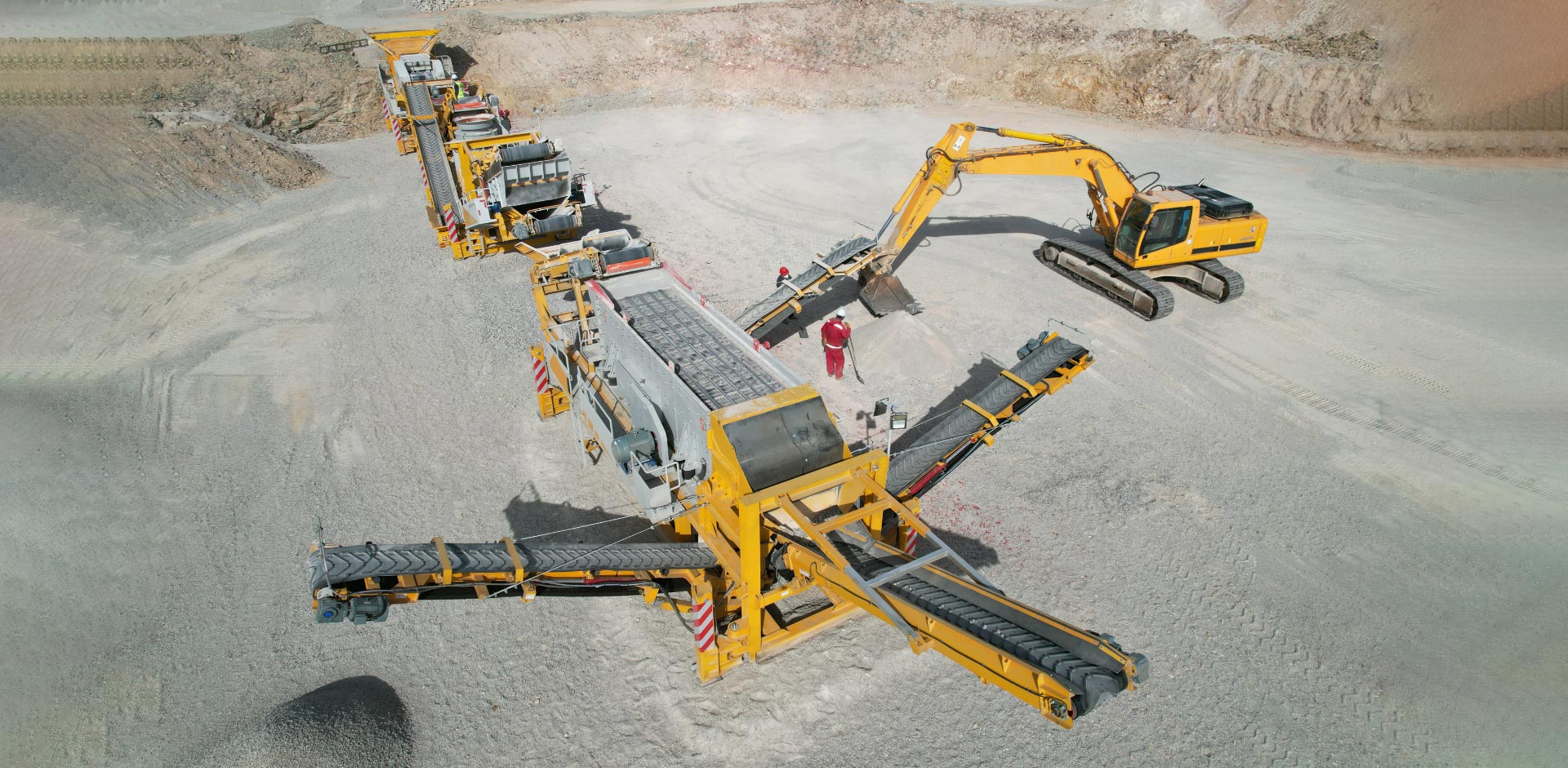
When a construction project is located far from commercial quarries, securing a reliable supply of aggregates can become a major logistical challenge. Long-distance deliveries, unpredictable transportation schedules, and changing material requirements often affect construction progress. Establishing an aggregate crushing plant near the project site offers an alternative to relying entirely on external suppliers. By processing locally available rock, contractors can produce the materials they need while gaining greater control over production schedules and inventory management.
This case study explores how a portable aggregate crushing plant solution(planta trituradora de agregados) can transform aggregate supply at a remote construction site. Instead of focusing only on crushing capacity, it examines how equipment configuration, material handling, production scheduling, and equipment relocation work together to support continuous construction operations.
Project Background: Why External Aggregate Supply Became a Problem
The project involved infrastructure construction across several sections of a remote area. Although natural rock deposits were available nearby, there was no established quarry capable of supplying finished aggregates in the required quantities.
Initially, the contractor considered purchasing aggregates from commercial suppliers. However, three problems quickly became apparent:
- High transportation costs: Trucks had to travel considerable distances, increasing fuel expenses and delivery costs.
- Uncertain delivery schedules: Poor road conditions and seasonal weather could interrupt material transportation.
- Changing aggregate requirements: Different construction stages required different material sizes, making external purchasing difficult to coordinate.
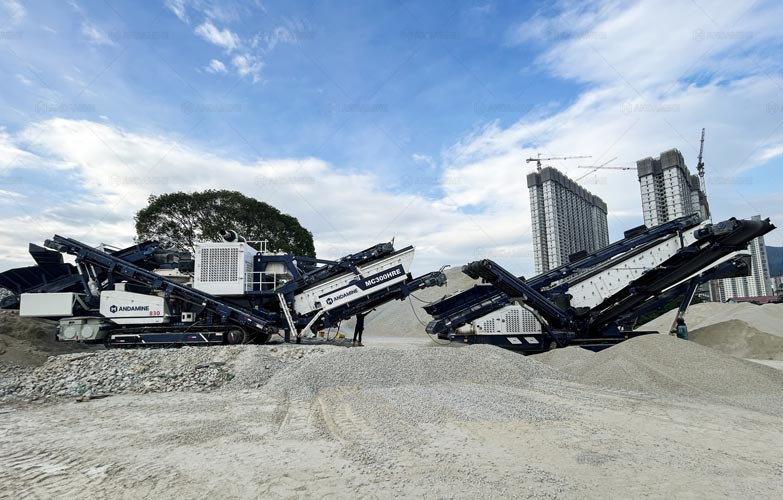
These challenges encouraged the contractor to reconsider its material supply strategy. A portable stone crushing plant could be installed closer to the raw material source, reducing transportation dependence and creating a more flexible production arrangement.
Planning On-Site Aggregate Production Around Construction Demand
Before purchasing equipment, the contractor evaluated the relationship between available raw materials, construction consumption, and the expected project duration. This assessment helped determine whether an independent aggregate crushing plant would be economically practical.
Evaluating Local Rock Resources
Raw material testing was an important first step. Rock hardness, abrasiveness, maximum feed size, moisture content, and potential aggregate quality all influenced the equipment selection process.
For example, hard and abrasive materials require a different crushing configuration from softer limestone. Selecting an unsuitable jaw crusher(trituradora de mandíbulas) or secondary crushing machine could increase wear-part consumption and reduce production efficiency.
Testing also helped establish whether the processed materials could meet the grading and quality requirements for road construction, concrete production, and other infrastructure applications.
Matching Production to Material Consumption
Rather than operating the crushing equipment continuously, the contractor could organize production according to the construction schedule. When road base preparation required more coarse aggregates, production could prioritize the corresponding product sizes. When concrete placement increased, screening arrangements could be adjusted to maintain sufficient quantities of suitable fine and medium-sized aggregates.
This demand-oriented approach made the aggregate crushing plant an integrated part of construction planning instead of an independent material processing operation.
Building a Portable Crushing System for Different Material Requirements
Equipment configuration needed to balance processing performance with transportation convenience. The objective was to establish a stone crushing plant that could handle local raw materials without creating unnecessary installation or relocation difficulties.
Primary Crushing with a Jaw Crusher
A vibrating feeder delivers large raw rocks into the jaw crusher, where primary size reduction takes place. This equipment is particularly suitable for handling large feed materials and processing various types of natural stone.
For remote operations, stable feeding is essential. An appropriately matched feeder helps maintain a consistent material flow, reducing the risk of overloading and unnecessary interruptions. The jaw crusher should also be selected according to the maximum feed size and required output of the entire production line, rather than its rated capacity alone.
Secondary Crushing and Aggregate Size Control
After primary crushing, materials enter the secondary processing stage. Depending on rock characteristics and finished product requirements, an impact crusher or cone crusher can be incorporated into the system.
An impact crusher may be suitable for materials such as limestone when favorable particle shape is required. For harder and more abrasive rocks, a cone crusher may offer better long-term wear economics. The correct combination helps the aggregate crushing plant maintain a balanced production flow and achieve the required particle size distribution.
Concrete Crusher for Recycled Construction Materials
Some remote infrastructure projects also involve demolishing existing roads, foundations, or concrete structures. In these situations, a concrete crusher can process suitable demolished concrete into reusable materials.
Reinforced concrete requires appropriate steel separation before crushing or during the recycling process. After processing and quality inspection, the resulting recycled aggregates may be used for approved road subbase, temporary access roads, or other suitable applications. This provides an additional material source and can reduce the volume of construction waste requiring disposal.
Organizing Material Flow After the Crushing Plant Starts Operating
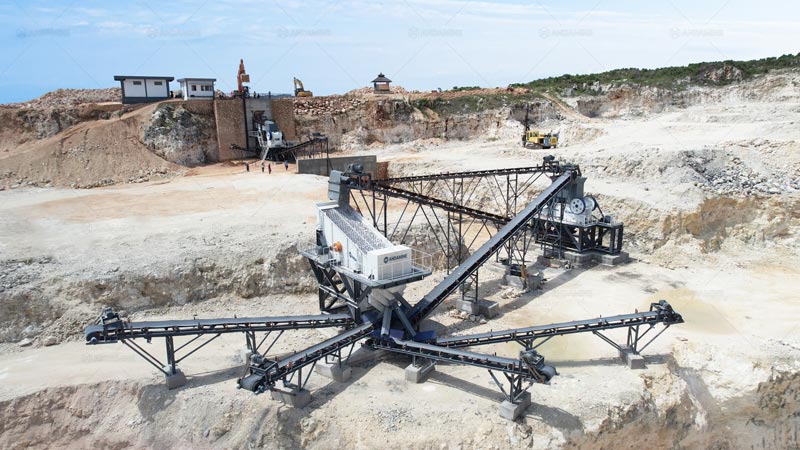
Installing a portable stone crushing plant changes more than the location of aggregate production. It also allows contractors to reorganize how raw materials, finished products, and construction equipment interact across the site.
Establishing Separate Aggregate Stockpiles
Crushing production and construction consumption rarely operate at exactly the same speed. Separate stockpiles for different aggregate sizes provide a buffer between these two operations.
Site managers can monitor inventory levels and schedule production before essential materials run short. This also prevents excessive accumulation of one aggregate size while another product is urgently needed.
Monitoring Quality Between Production Batches
Changes in raw material characteristics can influence finished aggregate quality. Recording the material source, jaw crusher settings, screening conditions, and inspection results helps operators identify the causes of inconsistent grading.
For projects using recycled materials, the concrete crusher(trituradora de hormigón) operation also requires appropriate quality checks. Recycled concrete aggregates should be evaluated according to their intended application rather than automatically mixed with natural aggregates.
Coordinating Maintenance with Construction Schedules
Unexpected equipment downtime can interrupt the entire material supply chain. Regular inspections of jaw plates, crusher liners, screen meshes, and conveyor components help reduce this risk.
For a stone crushing plant operating far from maintenance suppliers, keeping essential replacement parts and consumables on-site is particularly important. Planned maintenance during periods of lower aggregate demand can also minimize disruption to construction activities.
Measuring the Operational Benefits of Portable Crushing Equipment
The value of an aggregate crushing plant should be evaluated across the complete material supply process, not simply by comparing hourly production capacities.
| Evaluation Area | Potential Operational Improvement |
|---|---|
| Material transportation | Reduced dependence on long-distance aggregate deliveries |
| Production scheduling | Greater control over material availability and production timing |
| Inventory management | More flexible stockpile arrangements based on actual demand |
| Equipment utilization | Potential relocation and reuse across different project sections |
| Material recycling | Additional aggregate resources from suitable demolished concrete |
To calculate the actual financial return, contractors should compare on-site production expenses with the total cost of purchasing and transporting external aggregates. Equipment investment, installation, electricity or fuel, labor, maintenance, raw material extraction, and internal transportation should all be included.
When Does a Portable Crushing Plant Make Financial Sense?
Not every remote construction project needs its own stone crushing plant(planta trituradora de piedra). The investment is generally more attractive when suitable raw materials are available nearby, aggregate demand is substantial, and external transportation represents a significant proportion of total material costs.
Contractors should also consider whether the equipment can serve additional projects after the current construction contract is completed. A portable configuration that can be relocated and reused may provide greater long-term value than equipment designed exclusively for one site.
Other important considerations include site access, equipment transportation dimensions, installation requirements, local environmental regulations, and the availability of operators and maintenance support.
For contractors developing infrastructure in remote regions, an appropriately configured aggregate crushing plant can provide greater control over material supply and construction scheduling. AIMIX and its Andamine crushing equipment solutions offer portable and stationary configurations that can be selected according to raw material characteristics, production targets, and site conditions. Whether the project requires a jaw crusher for natural rock processing or a concrete crusher for recycling demolished structures, matching the equipment to actual operating requirements is essential. With proper production planning and equipment utilization, a portable stone crushing plant can become a reusable production asset for multiple infrastructure projects.