As container terminals worldwide navigate transitions toward decarbonization and operational digitalization, terminal operators and equipment procurement decision-makers face critical long-term technical choices. As one of the primary horizontal transport options in the container yard—frequently operating in tandem with high-performance ship-to-shore (STS) cranes at the quay—the powertrain technology of straddle carriers significantly influences terminal operating efficiency and cost structures over a multi-year horizon.
When planning future fleet acquisitions, a key debate centers on whether to continue utilizing highly mature, traditionally reliable diesel powertrains—similar to those historically deployed on traditional rubber-tyred gantry (RTG) cranes—or to transition to battery-electric propulsion systems, which offer significant potential for local emission reductions.
This article provides an objective comparison of diesel and electric straddle cranes across five operational dimensions: Total Cost of Ownership (TCO), operational efficiency, infrastructure requirements, regulatory compliance, and future adaptation. Our objective is to assist port terminal decision-makers in evaluating the practical benefits and challenges associated with each technology.
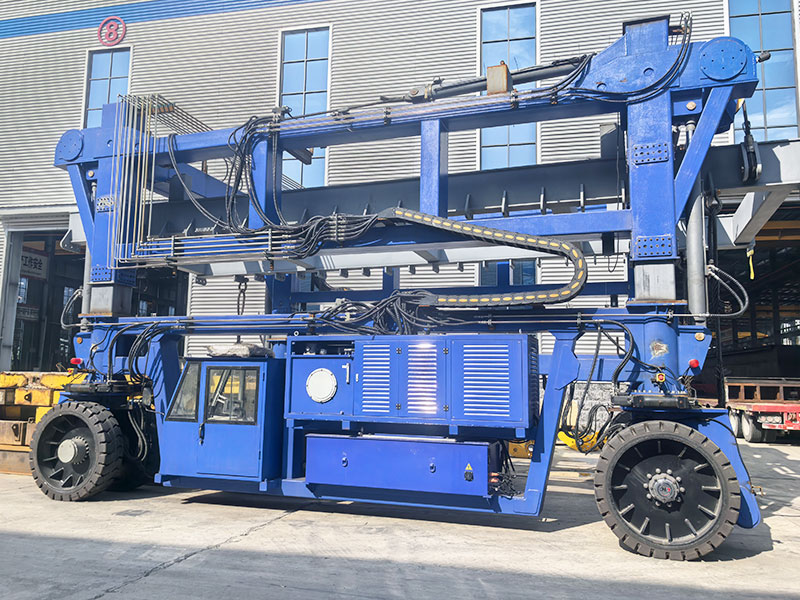
1. Diesel Straddle Carriers: The Established Traditional Solution
For decades, diesel-powered straddle carriers have served as a common equipment choice for maritime container hubs. Their operational flexibility and established reliability have supported terminals in managing growing TEU volumes, working closely with various yard systems and heavy duty gantry cranes.
Primary Characteristics and Advantages:
- Lower Initial Capital Expenditure (CapEx): Compared to battery-electric models, diesel straddle carriers generally carry a lower initial purchase price. Additionally, they do not require immediate terminal investment in high-power charging grids, battery-swapping stations, or major local grid upgrades.
- Operational Flexibility and Minimal Downtime: Refueling a diesel straddle carrier typically takes under 10 minutes. Once refueled, the equipment can return to continuous operations. This makes diesel fleets highly adaptable to unexpected peaks in workload, coordinating smoothly with quay-side operations and mobile harbour cranes (MHC) in multi-purpose terminals.
- Established Support and Maintenance Ecosystem: Existing maintenance teams are highly familiar with internal combustion engines (ICE) and traditional hydraulic systems. Spare parts are widely available, and global supplier networks are highly mature, minimizing technical barriers to maintenance.
Primary Limitations and Challenges:
- Operating Expenditures (OpEx) Vulnerable to Price Fluctuations: Fuel costs are highly dependent on global oil price volatility. Furthermore, diesel engines contain numerous moving parts that require regular maintenance, including oil changes, filter replacements, and scheduled overhauls, resulting in ongoing labor and material costs.
- Rising Regulatory Compliance Pressures: With strict regional and international carbon-reduction frameworks (such as the EU ETS, regional clean air actions, and IMO targets), diesel emissions (NOx, particulate matter, and CO2) are increasingly subject to financial penalties and localized operational restrictions.
- Local Emissions and Noise Levels: The operation of internal combustion engines generates noise and tailpipe emissions, which can impact both the terminal working environment and relations with neighboring municipal areas.
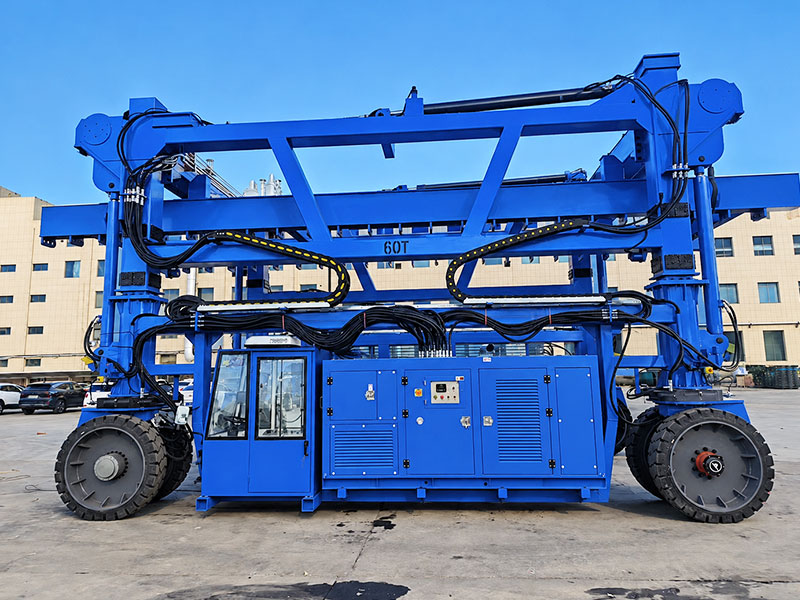
2. Electric Straddle Carriers: The Low-Emission Alternative
Battery-electric straddle carriers have progressed beyond experimental designs and are now actively deployed in commercial terminal operations. For operators looking to systematically reduce local environmental impacts—aligning with the zero-emission standards already common in electric rail mounted gantry cranes – electric propulsion offers a viable alternative.
Primary Characteristics and Advantages:
- Lower Utility and Maintenance Costs (OpEx): In many regions, industrial electricity rates are more stable and economical than diesel fuel. Additionally, electric powertrains are mechanically simpler, omitting internal combustion engines and complex mechanical transmissions. This reduction in moving components lowers the frequency and cost of regular maintenance.
- Regenerative Energy Recovery: Most modern electric straddle carriers utilize regenerative systems. During braking or when lowering heavy containers from high tiers, kinetic and potential energy is converted back into electrical energy and stored in the battery pack, improving overall system efficiency.
- Zero Local Emissions and Reduced Noise: Battery-electric equipment produces no local tailpipe emissions and operates at significantly lower noise levels, contributing to improved working conditions for operators and ground staff.
Primary Limitations and Challenges:
- Higher Initial Capital Commitment: The upfront price of battery-electric units remains high, largely due to battery chemistry and integration costs. Terminals must also budget for localized civil and electrical engineering works to support megawatt-level opportunity charging or battery-swapping facilities.
- Scheduling and Yard Integration Requirements: Managing battery charge cycles requires coordination. Opportunity charging setups require strategically located charging lanes, while battery-swapping systems require additional spare battery packs and swapping gantries. Both options require careful integration with the Terminal Operating System (TOS) to prevent bottlenecks.
- Grid Capacity Dependencies: Older, established brownfield terminals often face localized grid capacity limitations that can prevent the immediate simultaneous charging of large electric fleets without extensive utility upgrades, unlike fully electrified fixed tracks utilized by automatic RMG cranes.
3. Comparative Metric Matrix
The following matrix summarizes how both powertrain options compare across critical operational metrics:
| Operational Dimension | Diesel Powertrain | Battery-Electric Powertrain | Trend and Relative Advantage |
|---|---|---|---|
| Initial CapEx | Low to Moderate | High (Machine + Grid Infrastructure) | Diesel (Favorable for near-term capital preservation) |
| Long-Term OpEx | High (Vulnerable to fuel volatility and high maintenance) | Low (Typically stable energy costs and reduced upkeep) | Electric (Highly favorable for lowering long-term operating costs) |
| Estimated ROI Period | Baseline reference | 3 to 6 Years (Varies by container volume, local electricity, and diesel prices) | Electric (Higher utilization rates accelerate the return on investment) |
| Operational Duty Cycle | 24/7 continuous with short refuel times | Dependent on scheduled charging intervals or swap times | Diesel (Though smart TOS scheduling is narrowing this operational gap) |
| Environmental Compliance | Subject to potential emission penalties and taxes | Zero local emissions; may qualify for local green incentives | Electric (Strong long-term compliance advantage) |
| Asset Lifecycle | Mechanical efficiency declines; maintenance increases after year 7–10 | Electric motors exhibit long operational lives; battery replacements expected at year 8–10 | Electric (Simpler mechanical design leads to a stable lifecycle) |
4. Evaluation Framework: Selecting the Appropriate System
Because local terminal conditions vary, the choice of powertrain should be made based on several operational parameters. Decision-makers should evaluate the following four aspects of their terminals:
What is the terminal’s electrical infrastructure capacity?
If the terminal has immediate access to adequate power, or if the port is already undergoing comprehensive electrification (such as implementing shore power / cold ironing for vessels and electrifying existing RTG cranes), transitioning to battery-electric straddle carriers is a highly compatible path. If grid expansion is too costly or technically unfeasible, a hybrid system may serve as a practical intermediate solution.
What is the throughput intensity and space availability?
For dense, high-volume hub terminals where yard space is constrained and equipment must maintain continuous operation, diesel’s rapid refueling remains a practical asset. However, if the Terminal Operating System (TOS) is configured to manage smart opportunity charging—such as scheduling 15-minute quick-charges during operator shift changes or low-intensity windows—then electric fleets can satisfy demanding workloads without disrupting workflows.
What are the local environmental regulations and policy outlooks?
If the terminal is located in regions governed by stringent clean-air initiatives—such as the European Union (subject to EU ETS regulations), coastal North America, or zero-emission port zones in Asia—the long-term viability of diesel equipment is likely to decline. In these markets, electric or hybrid options provide a more resilient regulatory pathway.
What is the financial structure and lease term?
If the operator has access to low-cost financing or public environmental grants, and the evaluation is based on a 10-to-15-year Total Cost of Ownership (TCO), the energy and maintenance savings of an electric fleet can offset the initial capital premium over time. For terminals operating on short concession leases or facing immediate capital constraints, diesel remains the lower-barrier option.
Conclusion
While diesel-powered straddle carriers remain highly relevant due to their adaptability and lower entry barrier, the long-term direction of horizontal yard transport is moving toward electrification.
For terminal operators seeking to minimize exposure to fuel price volatility, simplify mechanical maintenance schedules, and mitigate future carbon tax risks over a 10-to-20-year horizon, battery-electric (or hybrid) straddle carriers represent a highly strategic, forward-looking option. A successful transition, however, requires a coordinated assessment of local infrastructure, terminal operating system capabilities, and long-term financial models.