In precast concrete manufacturing and heavy industrial yards, handling large concrete molds is one of the most damage-prone stages of production. These molds are expensive, precisely engineered, and highly sensitive to impact, misalignment, and uneven stress. Even minor handling errors can lead to surface deformation, cracking, or long-term structural distortion of the mold system.
Rubber Tyred Gantry (RTG) cranes have become a key solution for reducing these risks. By combining mobility, stable load distribution, and precise lifting control, RTG cranes significantly minimize damage during heavy concrete mold handling compared to traditional methods such as forklifts, overhead slings, or crawler cranes.
This article explores how rubber tyre gantry cranes reduce damage in heavy concrete mold handling and why they are increasingly adopted in precast plants and infrastructure production yards.
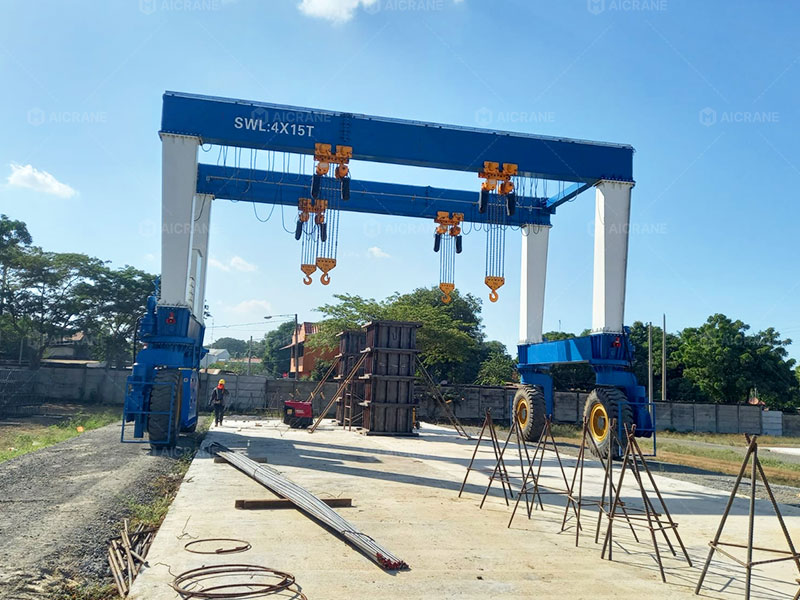
1. Why Concrete Mold Handling Is High-Risk for Damage
Concrete molds used in precast production (such as bridge beams, tunnel segments, wall panels, and slabs) are typically:
- Large and heavy (often tens to hundreds of tons)
- Precision-aligned steel structures
- Sensitive to uneven lifting forces
- Prone to deformation under point loading
Traditional handling methods introduce multiple risks:
1.1 Forklift-induced structural stress
Forklifts are often used for small or medium loads, but they are not ideal for large molds. When overloaded or improperly positioned, forklifts can cause:
- Uneven lifting forces
- Localized pressure points
- Frame twisting or bending
In fact, excessive forklift load handling can severely damage both equipment and cargo, increasing accident risks and reducing mold lifespan .
1.2 Collision and impact damage
In congested precast yards, forklifts and movable gantry cranes frequently operate in tight spaces. This increases the chance of:
- Side impacts during transport
- Abrupt stopping or swinging
- Mold-to-ground or mold-to-equipment collisions
1.3 Uneven ground stress transfer
If molds are dragged or lifted unevenly, stress is transferred unpredictably, causing:
- Surface cracks in concrete components
- Frame misalignment in steel molds
- Permanent deformation
These issues accumulate and reduce mold reuse cycles significantly.
2. RTG Crane Structural Advantages for Damage Reduction
RTG cranes are specifically designed for heavy-duty lifting environments such as container yards and precast concrete production facilities. Their structure plays a key role in minimizing damage.
2.1 Full-span load stability
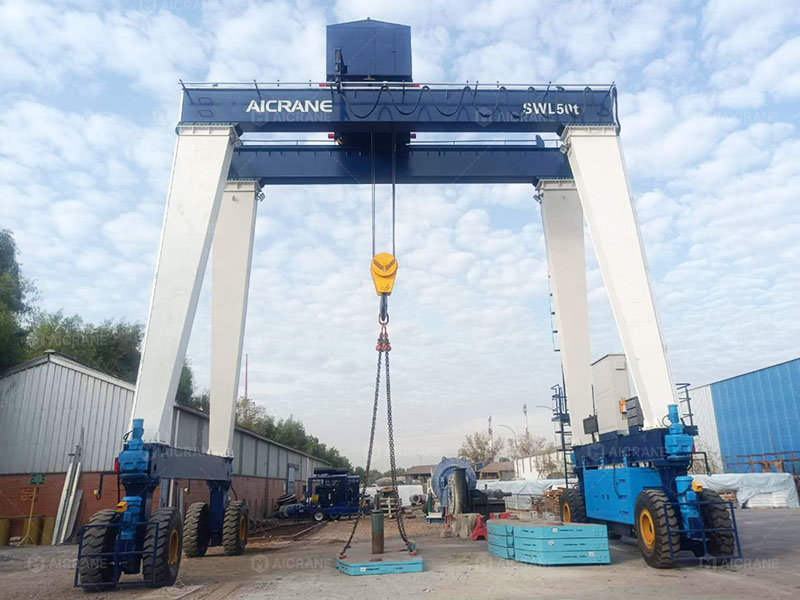
RTG cranes use a wide gantry structure that distributes load evenly across multiple tires and support points. This creates a stable lifting envelope for long and heavy precast components like bridge beams or molds .
Instead of concentrating force at one point (as forklifts do), RTG cranes:
- Spread load across the entire structure
- Reduce torsional stress on molds
- Prevent localized deformation
2.2 Rubber-tired mobility with controlled pressure distribution
Unlike rail mounted cranes, RTGs move on rubber tires. This allows:
- Even ground pressure distribution
- Reduced shock transfer to cargo
- Flexible movement without dragging loads
However, this depends heavily on proper ground preparation, as uneven surfaces can still lead to wear and instability .
3. Precision Handling Reduces Mold Misalignment
One of the biggest sources of damage in mold handling is misalignment during lifting and placement.
RTG cranes reduce this risk through:
3.1 Vertical lifting accuracy
RTG cranes lift molds vertically before movement, eliminating:
- Dragging across surfaces
- Side-load stress during pickup
- Scraping or scraping-induced damage
3.2 Controlled positioning systems
Modern RTG cranes often use:
- Frequency-controlled hoisting
- Anti-sway systems
- Precise gantry travel controls
These systems help operators position molds with millimeter-level accuracy, reducing accidental contact and collision risk.
3.3 Reduced manual intervention
Compared to forklifts or slinging systems, RTGs require fewer manual adjustments. This reduces:
- Human error during alignment
- Sudden load movement
- Improper rigging configurations
4. Reduced Vibration and Mechanical Stress
Vibration is a major cause of micro-cracks and structural fatigue in concrete molds.
RTG cranes help reduce vibration damage through:
4.1 Smooth acceleration and deceleration
Unlike forklifts, which often experience jerky starts and stops, RTGs provide:
- Gradual acceleration
- Controlled braking
- Stable load transitions
This reduces shock loads transmitted to molds.
4.2 Even load transfer during movement
RTGs distribute weight across multiple axles, minimizing sudden stress spikes during travel.
Surface conditions also play a major role here. Rough or unstable surfaces can increase vibration and tire stress, while smooth reinforced concrete significantly improves operational stability .
5. Ground Conditions Improve Mold Safety in RTG Operations
RTG cranes depend heavily on proper yard infrastructure. When the ground is well-prepared, damage risk drops dramatically.
5.1 Reinforced concrete surfaces
Concrete or asphalt surfaces are commonly used for RTG operations due to their high load-bearing capacity.
- Concrete provides strong, stable support for heavy dynamic loads
- Proper design prevents sinking or uneven tire pressure
A weak surface can cause uneven settlement, leading to instability and potential structural stress on both crane and load .
5.2 Reduced rolling resistance
Smooth ground reduces:
- Tire deformation
- Load oscillation
- Energy fluctuations during movement
This contributes to more stable mold handling.
6. RTG Cranes Reduce Handling Steps and Contact Points
Every additional handling step increases the chance of damage. RTG cranes reduce these steps significantly.
Traditional workflow (higher risk):
Forklift → reposition → lift again → manual alignment → transfer
RTG workflow (lower risk):
Single lift → transport → precise placement
Fewer steps mean:
- Fewer contact points
- Reduced probability of collision
- Lower cumulative stress on molds
This streamlined workflow is particularly important in high-volume precast yards where molds are moved frequently throughout the day.
7. Enhanced Safety Prevents Secondary Damage
Secondary damage often occurs due to accidents, such as:
- Load dropping
- Sudden swinging
- Crane collisions
RTG cranes reduce these risks through:
7.1 Stable gantry movement
Their wide base and multi-wheel support improve stability during motion, reducing tipping risk.
7.2 Controlled load handling systems
Modern RTGs integrate safety systems that limit:
- Overloading
- Excessive sway
- Unsafe lifting angles
This ensures molds remain stable even under heavy lifting conditions.
8. Reduced Wear on Concrete Molds and Equipment
Long-term damage reduction is not only about preventing accidents but also reducing wear over time.
RTG cranes help by:
- Avoiding repeated impact loading
- Preventing uneven lifting cycles
- Maintaining consistent lifting geometry
Over time, this leads to:
- Longer mold lifespan
- Lower repair frequency
- Improved production consistency
9. Application in Precast Concrete Plants
RTG cranes are widely used in:
- Bridge girder production yards
- Tunnel segment factories
- Prefabricated building component plants
- Infrastructure mega-project sites
Their ability to handle irregular, heavy, and oversized molds makes rubber tyred straddle cranes ideal for modern precast operations where precision and safety are critical.
Conclusion
RTG cranes significantly reduce damage in heavy concrete mold handling by combining structural stability, precise lifting control, and smooth mobility. Unlike forklifts or manual rigging methods, RTGs eliminate many of the root causes of mold damage such as uneven load distribution, impact stress, vibration, and misalignment.
Their key advantages include:
- Even load distribution across rubber tires
- High-precision vertical lifting
- Reduced vibration and shock transfer
- Fewer handling steps and contact points
- Improved safety and operational control
As precast construction continues to grow in scale and complexity, RTG cranes are becoming an essential tool for ensuring that heavy concrete molds remain intact, reusable, and cost-efficient throughout their service life.