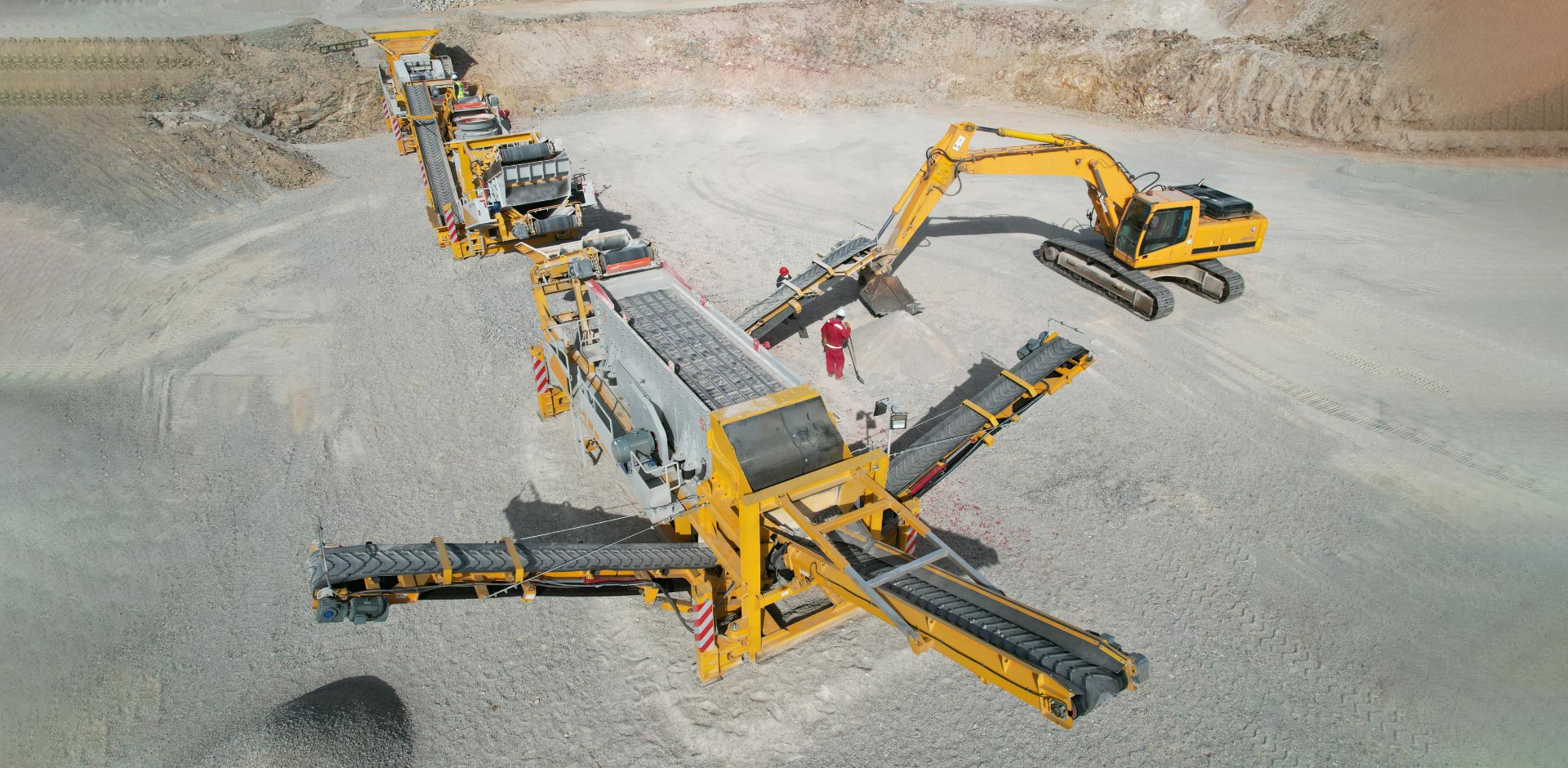
In the arid, mineral-rich sprawl of northern Chile, where copper and lithium rule the economy, large open-pit mines operate 24/7. At the heart of their comminution circuits stands a seemingly old-fashioned workhorse: the stationary stone crushing plant. While mobile solutions have gained ground globally, Chile’s mining giants have consistently doubled down on fixed, high-capacity installations. This article explores why stationary plants remain the backbone of Chilean mining, compares the regional context with Peru, and explains where mobile units fit—or don’t fit—into the picture.
The Immovable Anchor: Why Stationary Plants Dominate Chile’s Open-Pit Logic
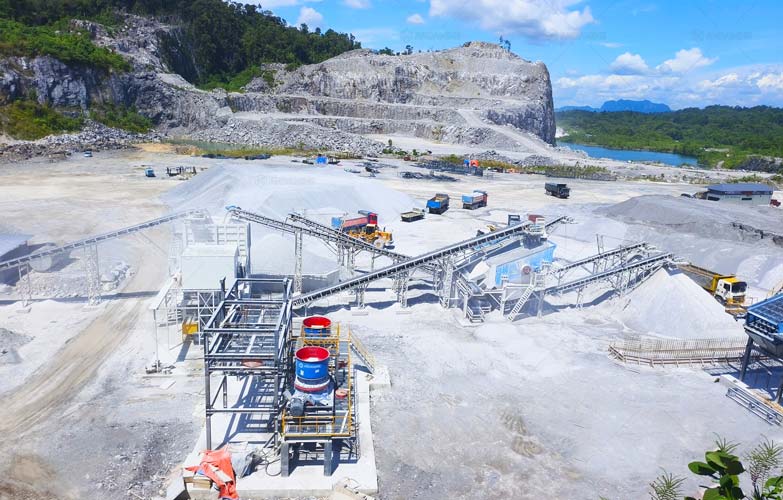
Open-pit mines in Chile’s Atacama region, such as Chuquicamata and Escondida, operate on decades-long timelines with predictable ore body geometries. A stone crusher plant Chile(planta chancadora de piedra Chile) operators trust is typically stationary, engineered for 20+ years of service.
Throughput and Reliability
Unlike their mobile cousins, stationary plants are integrated with overland conveyors, primary gyratory crushers, and massive coarse ore stockpiles. They handle 5,000 to 12,000 tonnes per hour without the maintenance penalties of crawler tracks or wheeled chassis.
Geological Advantages
Chile benefits from relatively flat, stable desert surfaces and massive, low-grade porphyry copper deposits that justify permanent infrastructure. For Chilean mine planners, the stationary plant is not a choice but a foundation.
Comparing Neighbors: Stone Crusher Plant Peru vs. Chile
Across the border, a stone crusher plant Peru(una planta chancadoras de piedra Lima Perú) often faces different constraints. Peruvian mines are more likely to be located in the high Andes with steep, unstable terrain and shorter mine lives due to polymetallic ore complexity.
Peru’s Preference for Mobility
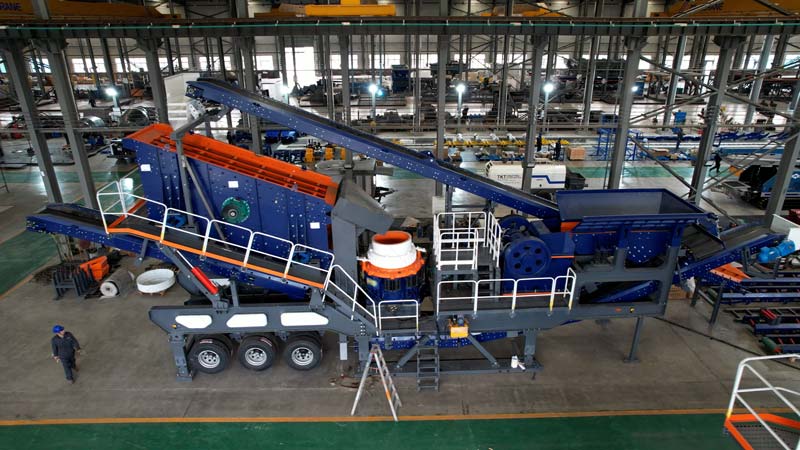
Peru has adopted more semi-mobile and mobile units. The terrain and variable ore bodies make relocatable crushers attractive. Chilean operations, in contrast, rarely relocate primary crushers once installed.
Technical Divergence
The Chilean approach favors modular stationary designs with oversized gyratory crushers, while Peruvian plants often rely on jaw-cone combinations with higher mobility. Both countries produce world-class aggregate for heap leaching, but Chile’s stationary bias is a distinct geological and economic response.
The Mobile Stone Crusher Plant: A Complementary Tool, Not a Replacement
A mobile stone crusher plant offers clear advantages in small quarries, construction recycling, or remote exploration camps. However, in Chile’s large open-pit mines, mobile units serve only niche roles.
Niche Applications
Mobile crushers clear oversize boulders at the working face, crush waste rock for temporary haul roads, or process low-grade stockpiles far from the fixed plant. They are never the primary production tool.
Cost and Efficiency Disadvantages
The primary reasons for avoiding mobile units are energy efficiency and cost per tonne. Mobile crushers(Plantas de trituración móviles), with their diesel-electric drives and less robust frames, incur 30–40% higher operating costs per tonne compared to a grid-powered stationary plant. Moreover, mobile plants require frequent relocation, which disrupts the continuous flow that Chilean mines prioritize.
Aggregate Plant Integration and In-Pit Crushing
Beyond ore processing, every large mine needs an aggregate plant for producing road base, riprap, and concrete aggregates for camp and leach pad construction. Here again, stationary crushers paired with screens and wash plants dominate.
Dust Suppression and Water Recirculation
Chile’s aggregate plant designs emphasize dust suppression and water recirculation—critical in the hyper-arid north. Stationary plants can house sophisticated baghouses and misting systems that mobile units cannot accommodate due to weight and space limits.
Shiftable Conveyors and Semi-Movable Units
Some modern operations have introduced in-pit movable (but not fully mobile) crushers that are relocated every 2–3 years via heavy crawlers. Yet these still feed a stationary downstream plant via shiftable conveyors. The core comminution and aggregate production remain fixed, with only preparatory and waste handling seeing mobility.
Why the “Evergreen” Label Fits: Durability and Electrification
Chile’s mining industry is aggressively decarbonizing. Stationary crushers easily connect to renewable-powered electrical grids (solar and wind), whereas mobile plants rely on diesel or high-voltage trolley systems that are less efficient.
Superior Wear Life and Maintenance
Stationary plants allow for superior wear part monitoring, automated lubrication, and condition-based maintenance—vital given the high silica content of Chilean ores. The result is a plant that can run for a decade with planned shutdowns only for liner changes and motor rewinds.
Decarbonization Benefits
With Chile aiming for carbon neutrality by 2050, stationary plants can be directly powered by the country’s booming solar photovoltaic farms. Mobile diesel plants face an uncertain future under stricter emissions regulations.
In summary, while Peru may favor flexibility and mobile units for its rugged polymetallic deposits, and while mobile stone crusher plants shine in dynamic environments, Chile’s large open-pit mines have proven that immobility is a feature, not a bug. The stationary plant, often integrated with an aggregate plant(planta de agregados) for dual purpose, continues to underpin one of the world’s most productive mining regions. As long as the copper keeps flowing from the Atacama, the rhythm of gyratory crushers will echo across the desert—steady, powerful, and rooted in place.